Articles
Development notes, update rundowns, how-to guides and world material — written as the game is built.
-
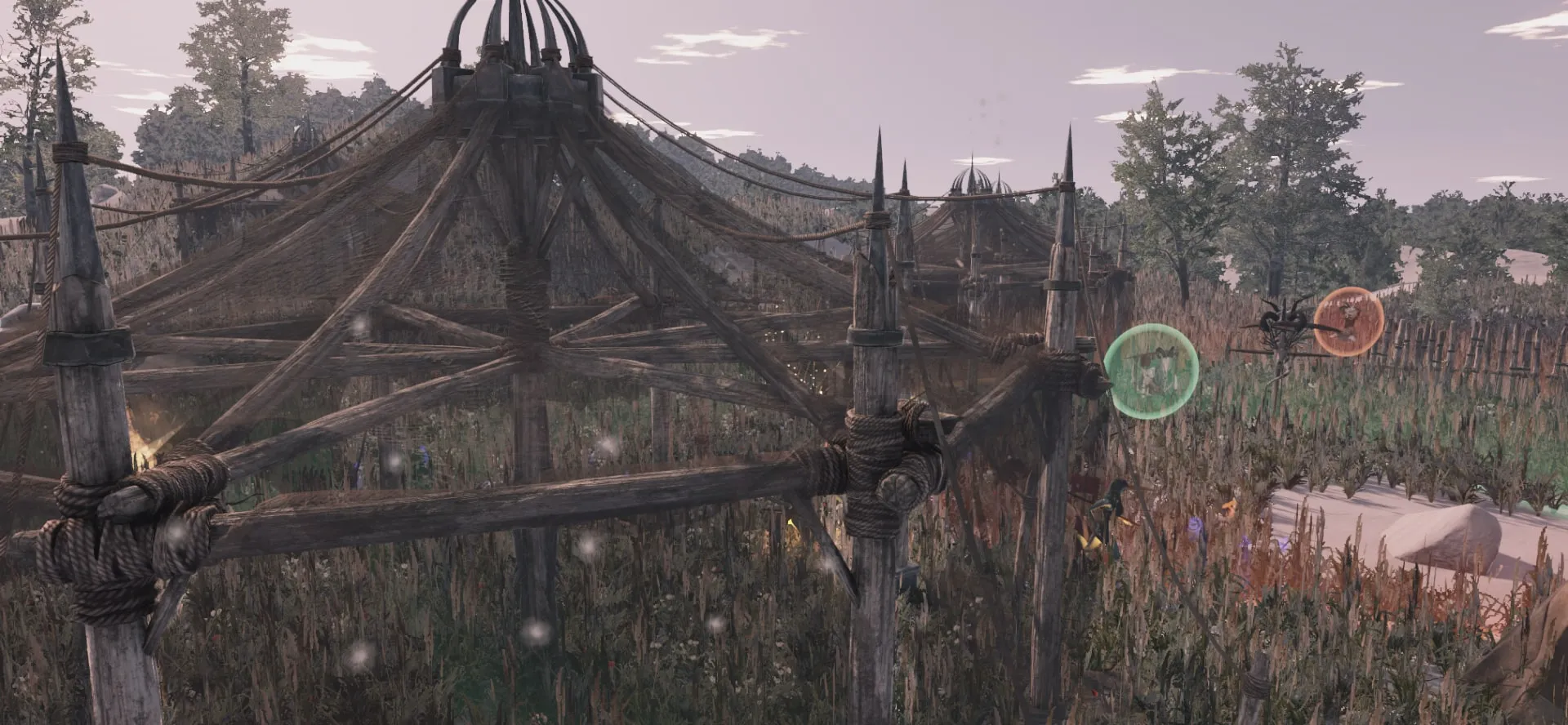
Auras, firing ranges and domes: the three circles on your ground
A circle on the ground can be an aura that buffs whoever stands in it, the reach of something that shoots, or a dome that eats arrows. Three different rules, three different counters — and the one aura whose radius grows stops just short of a bow's range, on purpose.
-
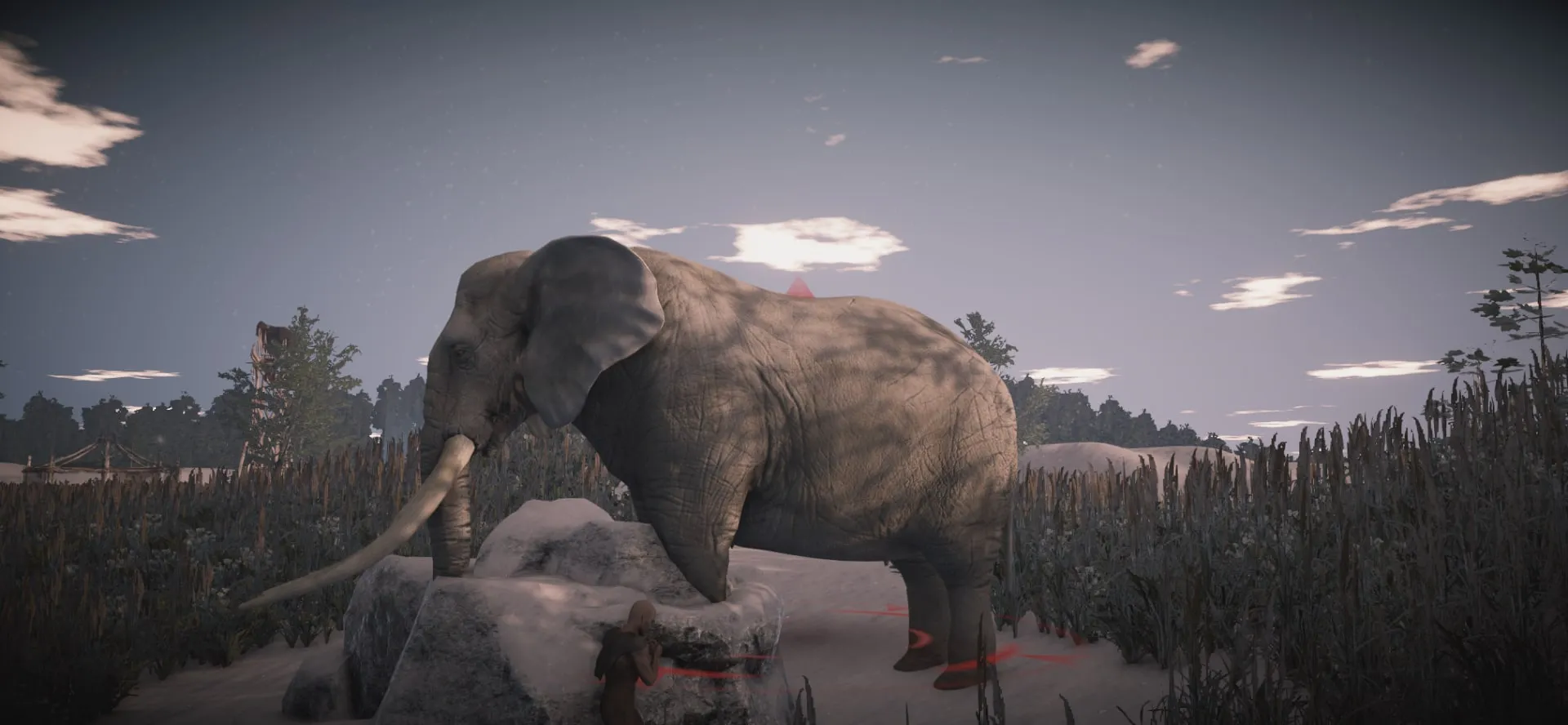
Flesh that forgets, stone that remembers too much
There are no species in this world, only three ways of being alive, depending on which of the Three First runs strongest in a creature's sap. The flesh-born, the nameless beasts, the woken stone — and the five tribes that argue about which one is right.
-
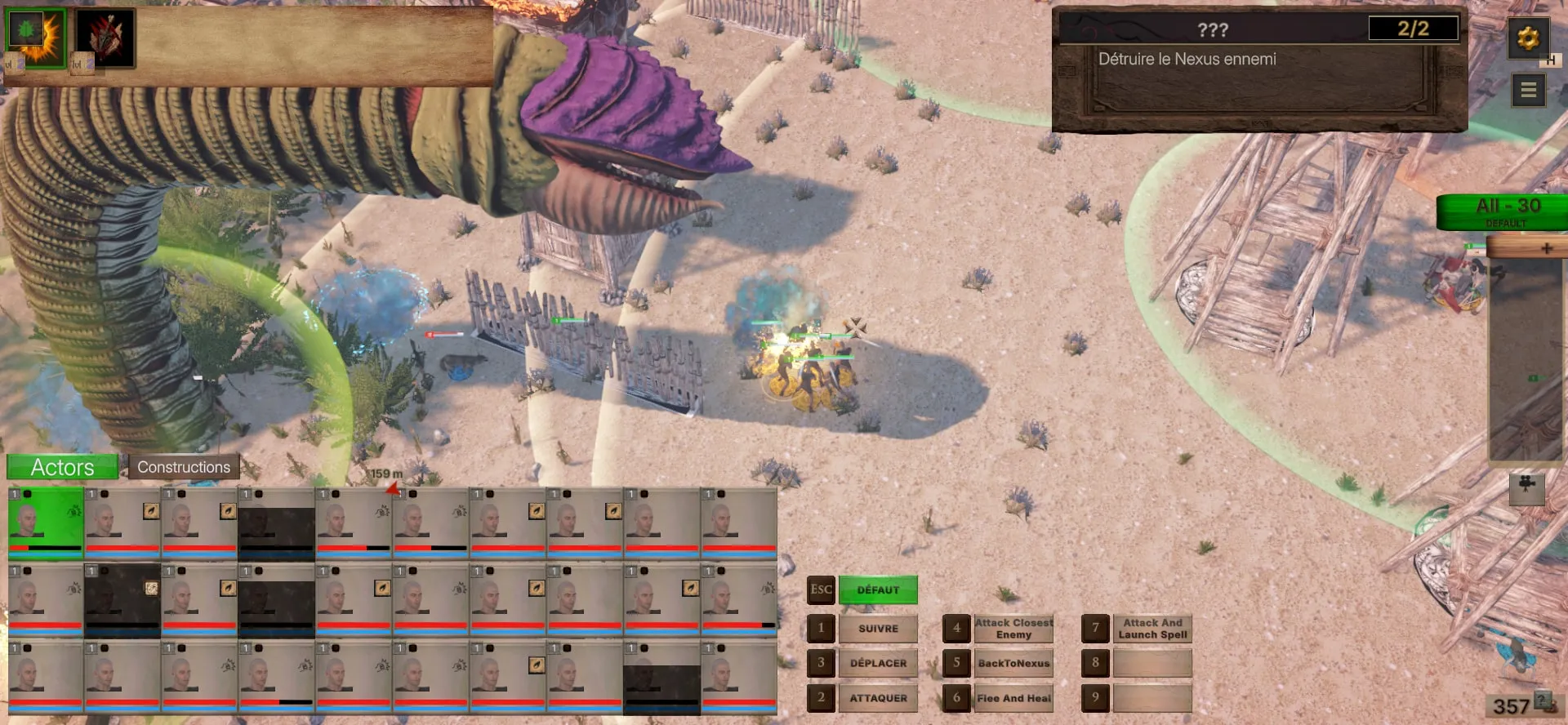
Macros and groups: what is left in your hands
You never click a unit, but two levers stay live during a fight: which behaviour a group is running, and how the tribe is cut into groups. Nine macro keys, six groups, and the three things worth watching instead of clicking.
-
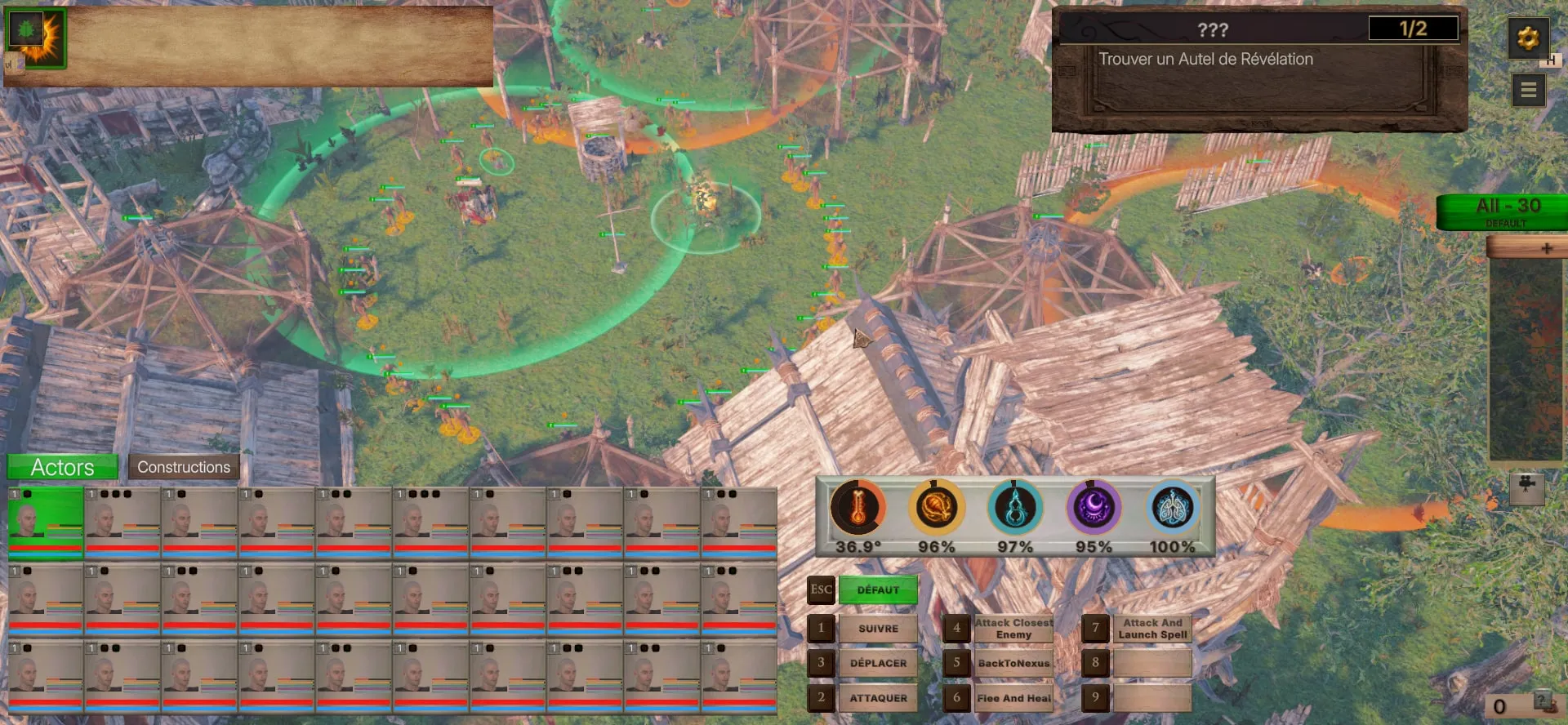
November: a visual pass, a new HUD and a fog of war
One sun per map instead of two, panels in wood rather than black slabs, survival gauges turned into ring dials, three-state fog of war, buildings whose upgrades finally do something, and more spells. Everything that changed in the game since mid-October.
-
The bug that only existed for the guest
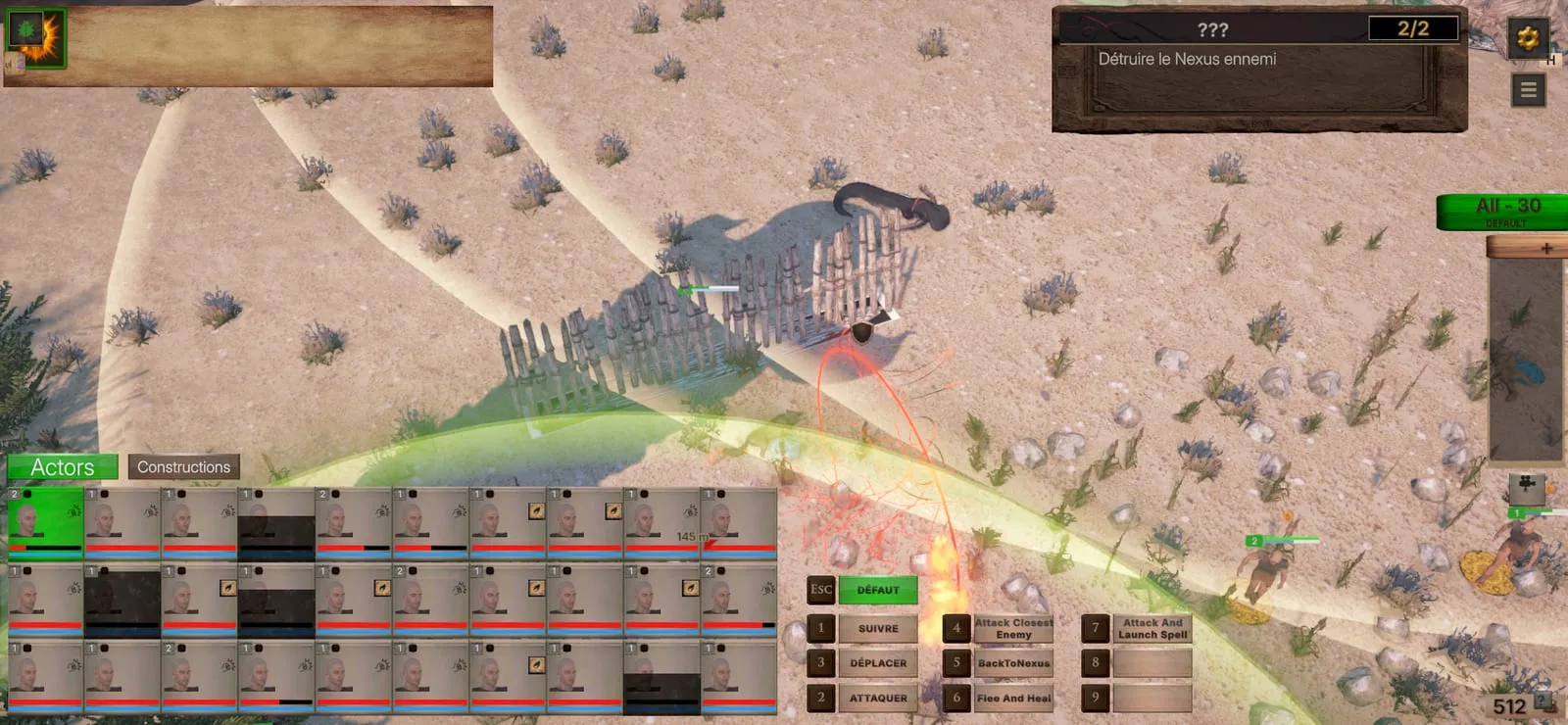
A player reported a PvP session where the cursor died, people died twice and the game kicked them out with nothing in their log. The host saw none of it. Four causes, all client-only, and the one rule that would have prevented all four.
-
The game films itself
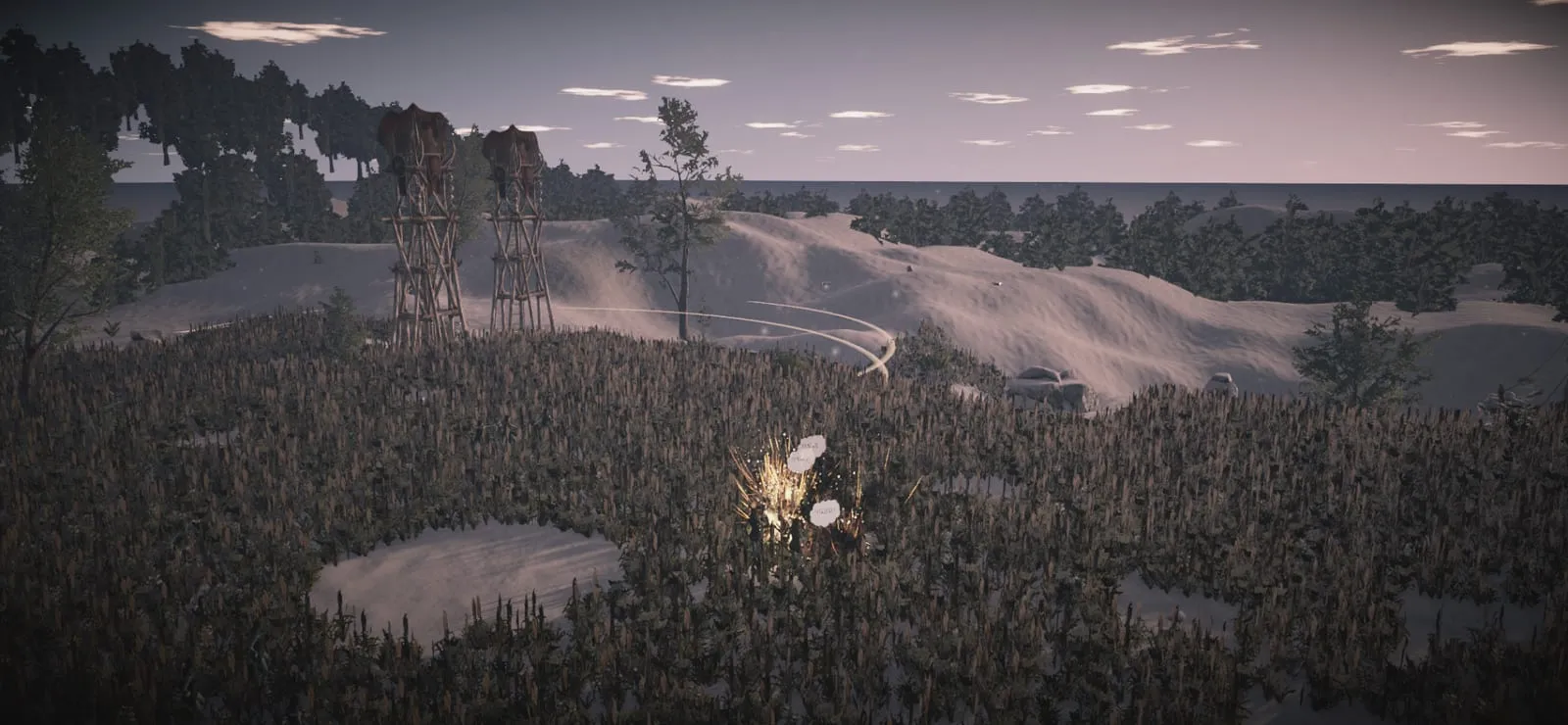
A JSON timeline drives a real match — start a game, frame the camera, run a macro, wait — while the run writes a log of every beat with its timecode. Screenshots, trailers and visual decisions all come out of the same mechanism.
-
The interface was from another game
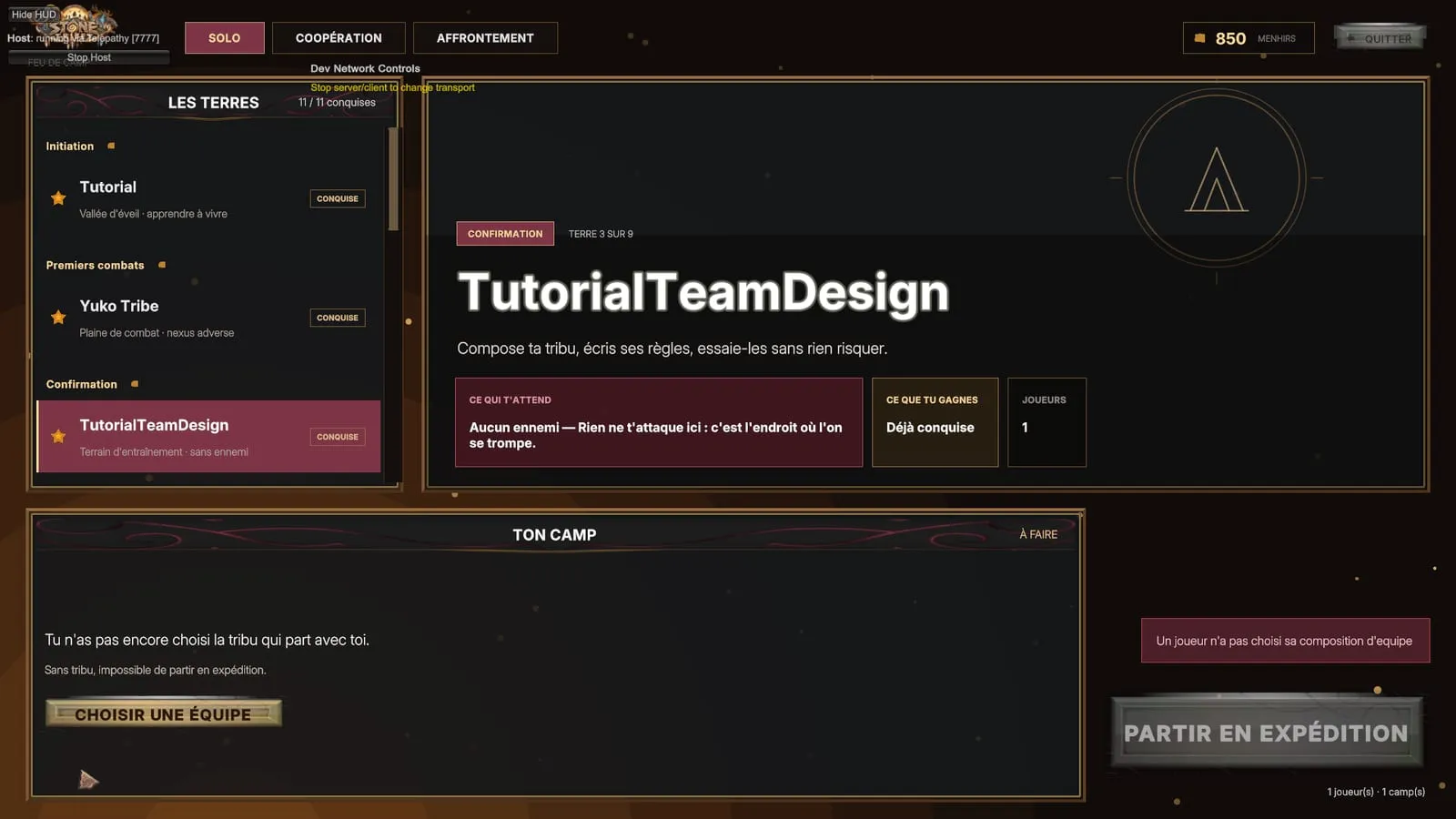
Three panels used an opaque black button sprite as both their background and their list background, so an empty inventory read as a large black slab in a game made of wood and painted hide. Replacing that, and the audit tool that found what was actually on screen.
-
The tower that never upgraded
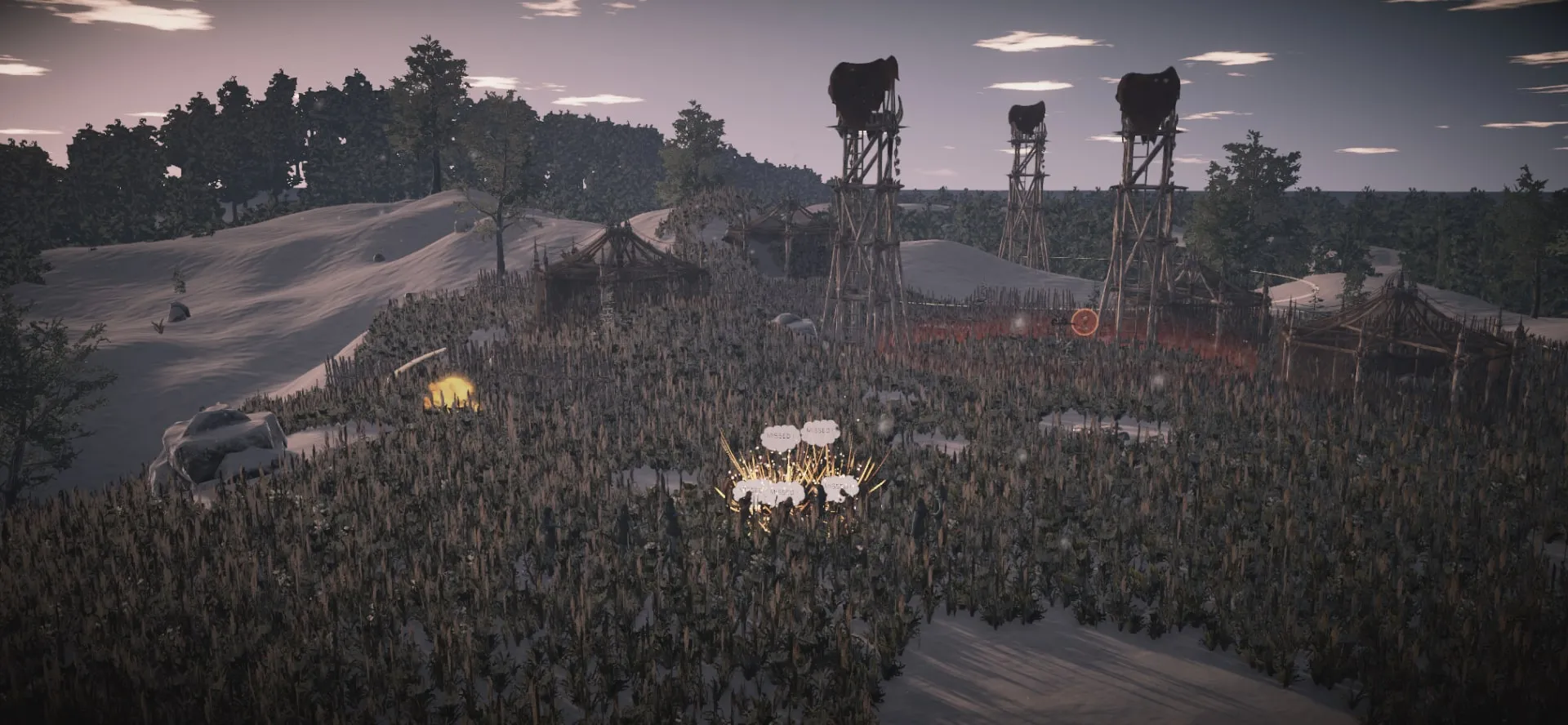
A defensive building could be levelled up, the window showed the cost, and absolutely nothing happened. The curves were written on a scale that runs to 254 while a building stops at 9 — so every upgrade delivered the first three per cent of what it promised.
-
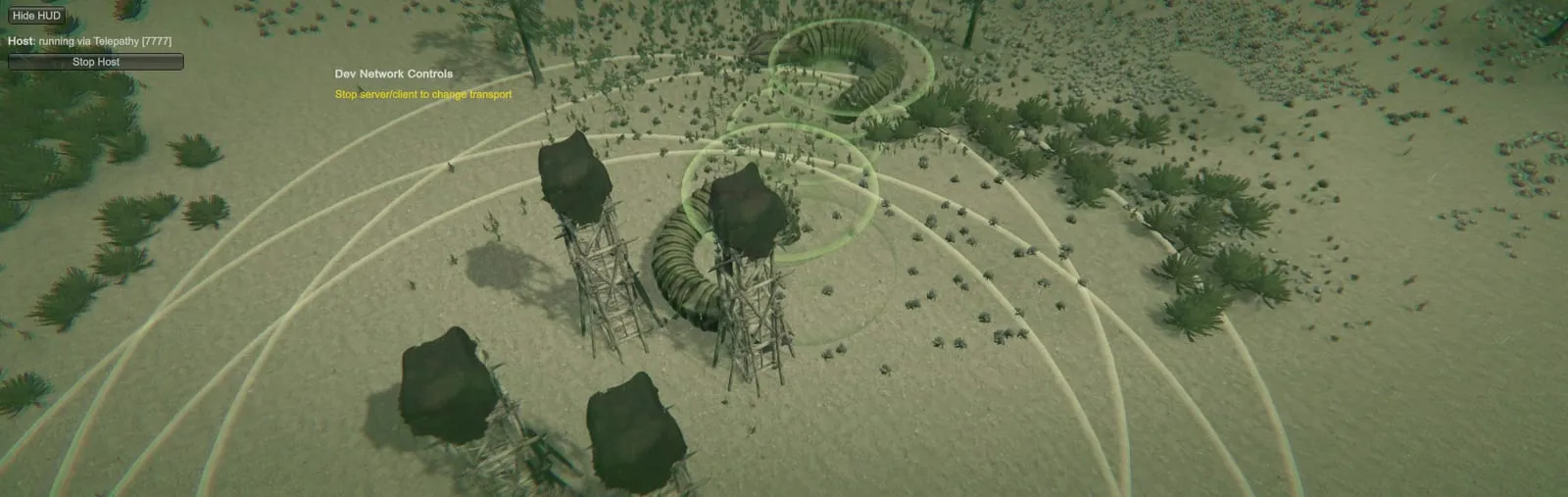
Two suns, and the hour the world stopped at
Two maps were lit by two suns at once, and the one casting the shadows was not the one the weather system thought it owned. Fixing that meant choosing a single hour for the whole game — and the choice was made by photographing every map at five of them.
-
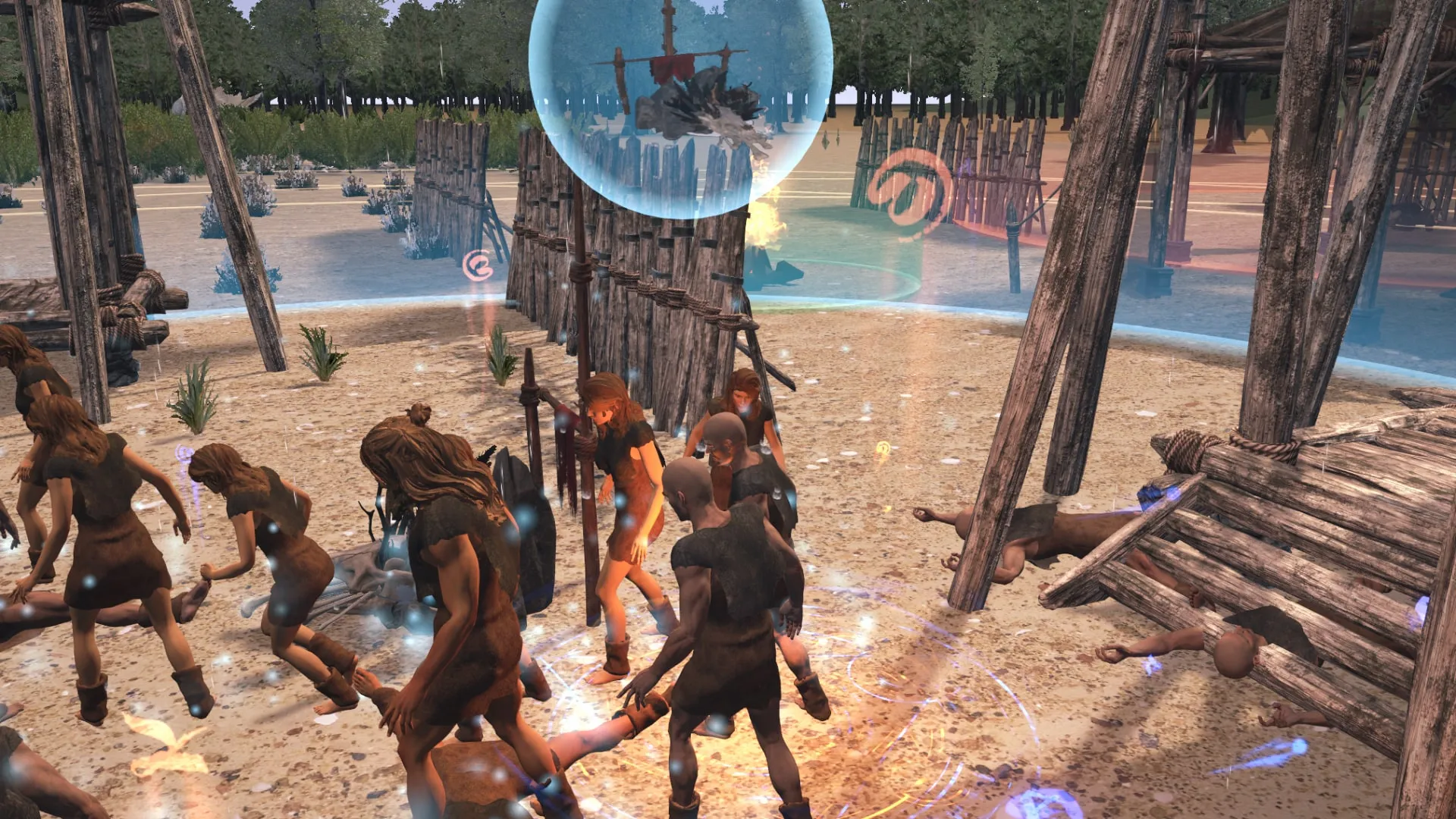
What your bag is actually doing
An item does not have to be equipped to count. The whole bag contributes, at a rate set by the weapon in hand — which makes loading one fighter a real strategy, with a real answer: everything falls on the ground when they die.
-
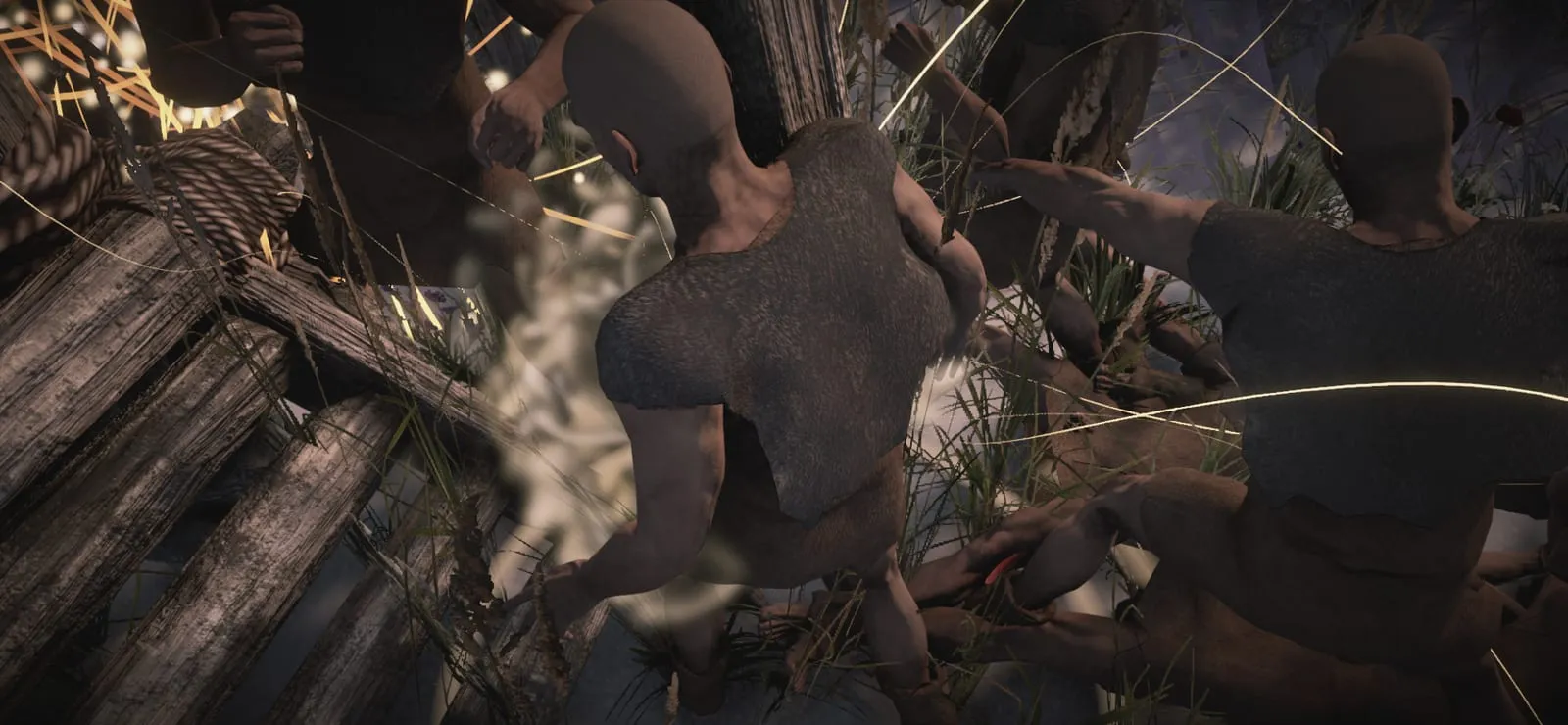
Who gets to decide that you won
A player joining a match used to win the instant the map finished loading, because "nothing of theirs is left" is trivially true on a client whose actor list is still empty. Moving every victory condition to the server, and what it taught about writing them.
-
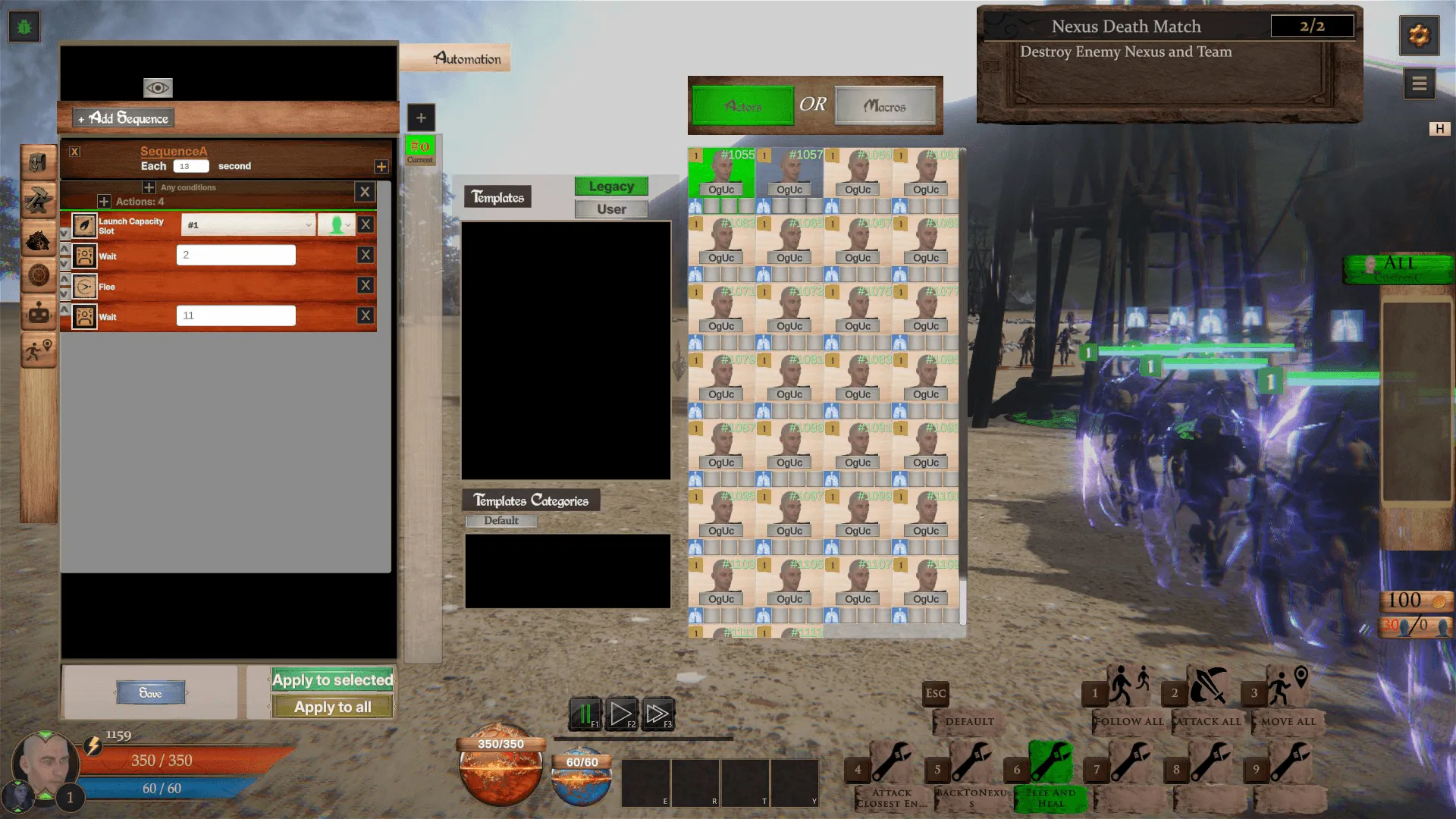
Why you cannot click a unit in Stone Tribes
Stone Tribes is a real-time strategy game with no unit control. You write the conditions your tribe fights under, and then you live with them. Here is what that removes, and what it gives back.
-
Every strategy has an answer: the counter chain
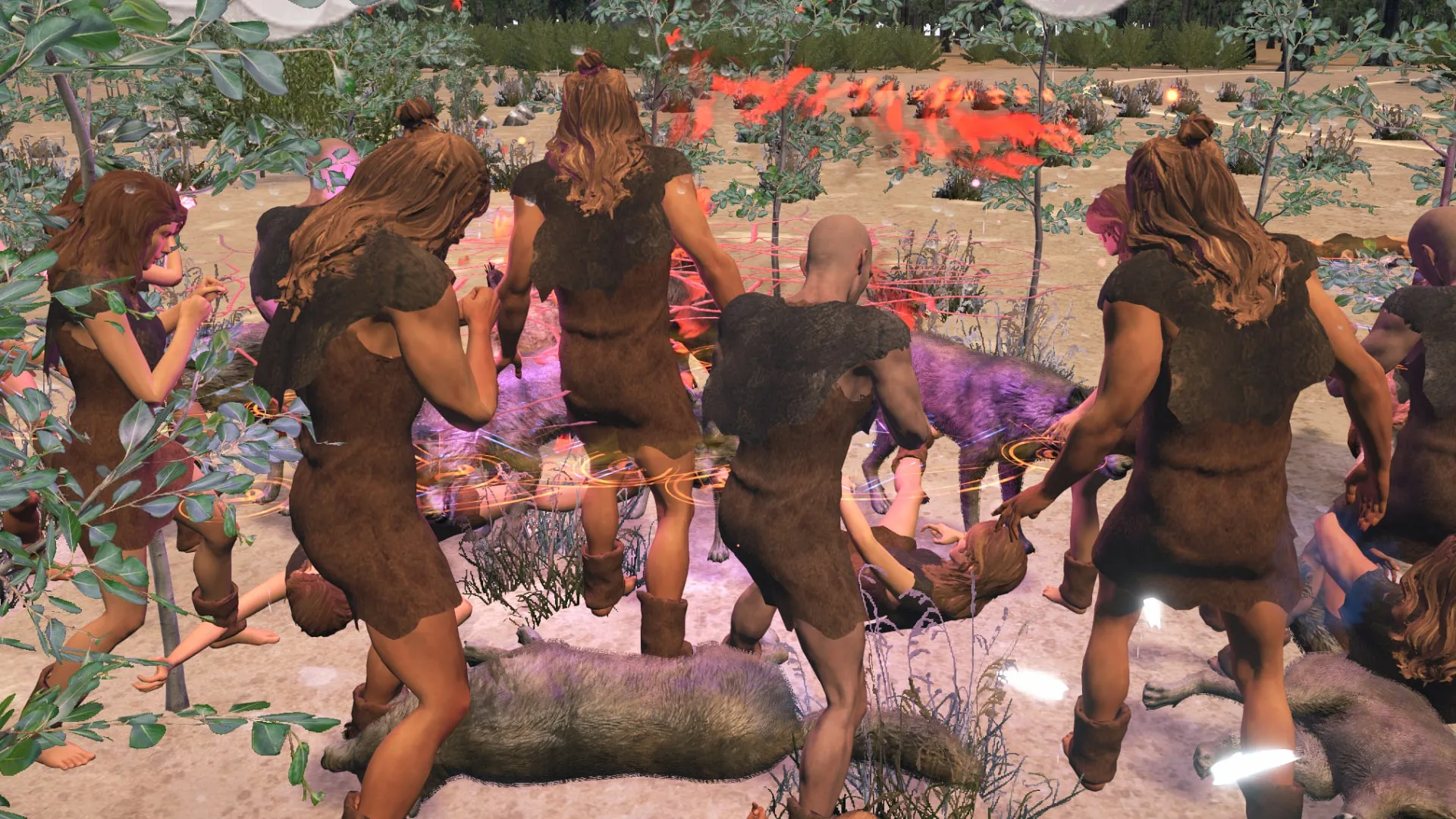
A melee rush is answered by blinding, blinding is answered by archers, archers are answered by a blind zone, and the zone is answered by a cleanse. The ladder that holds the combat together, and how to climb it one rung above whoever you are playing.
-
Rewriting the fog of war: three states, no objects
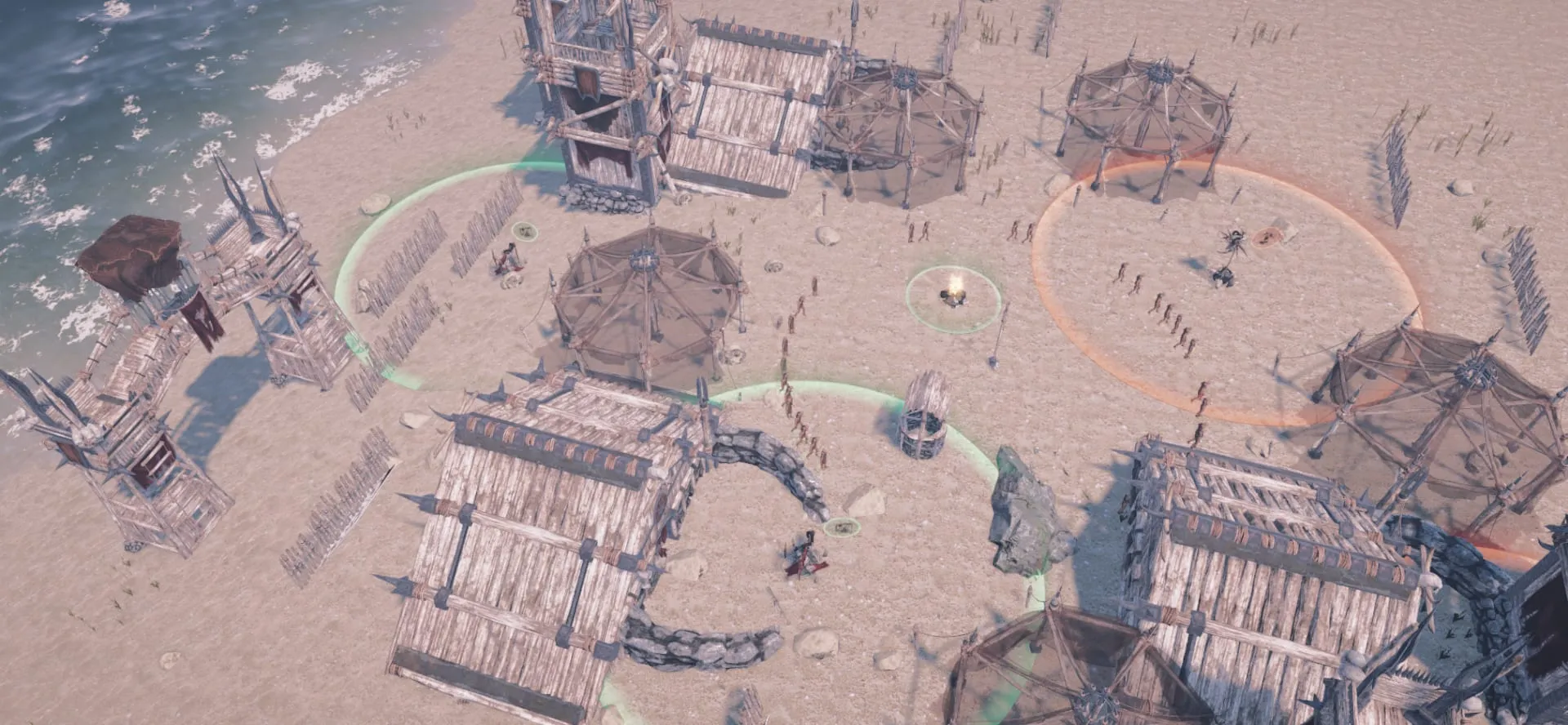
The first version put one object per tile on the map and switched them all on and off every frame. The new one is a grid of stamps and a single screen-sized quad that reads depth. Why the obvious implementation is the expensive one, and what the three states cost.
-
Sap and mana: magic is a conversation, not a resource
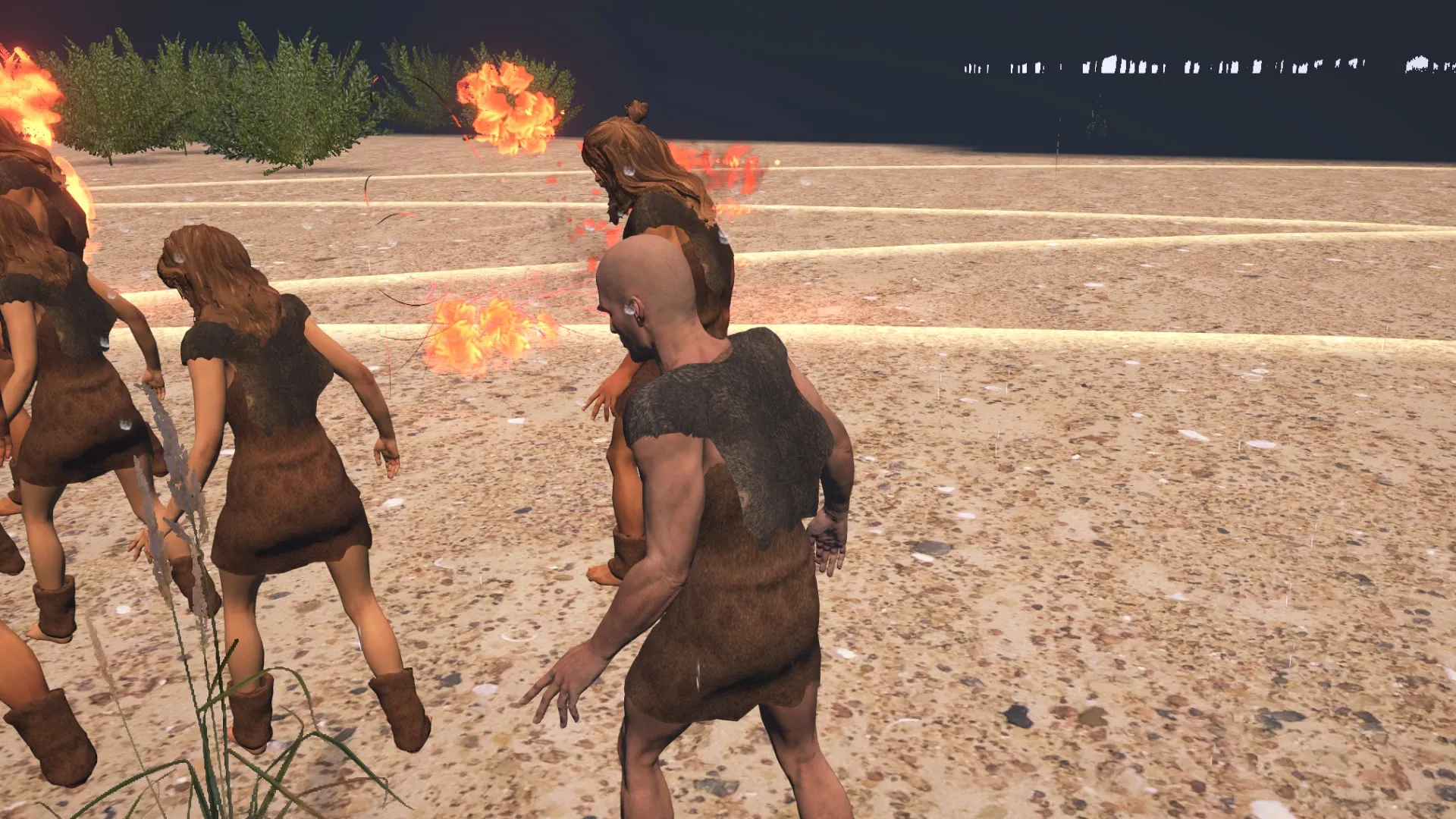
The blue bar is condensed Sap, the blood of a living world. Casting time is how long the world takes to listen, a cooldown is the world keeping quiet, and a curse is a debt owed to the mist. The fiction under the magic system.
-
The six classes, and what each one really changes
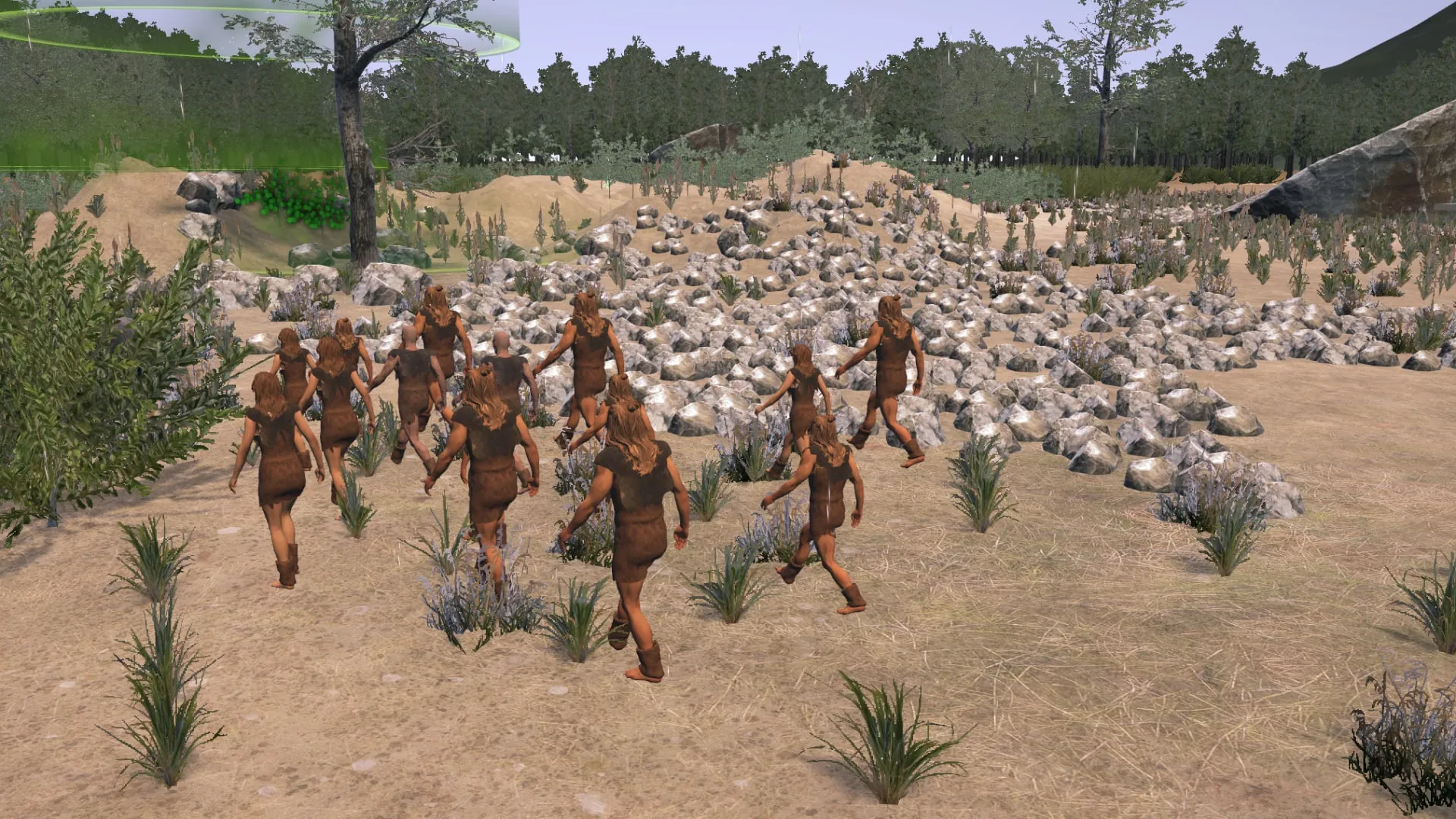
A warrior strikes about three times harder than an occultist and takes less than half the physical damage of a shaman. Here are the two numbers a fight actually reads, what every level gives, and what the six named characters carry from birth.
-
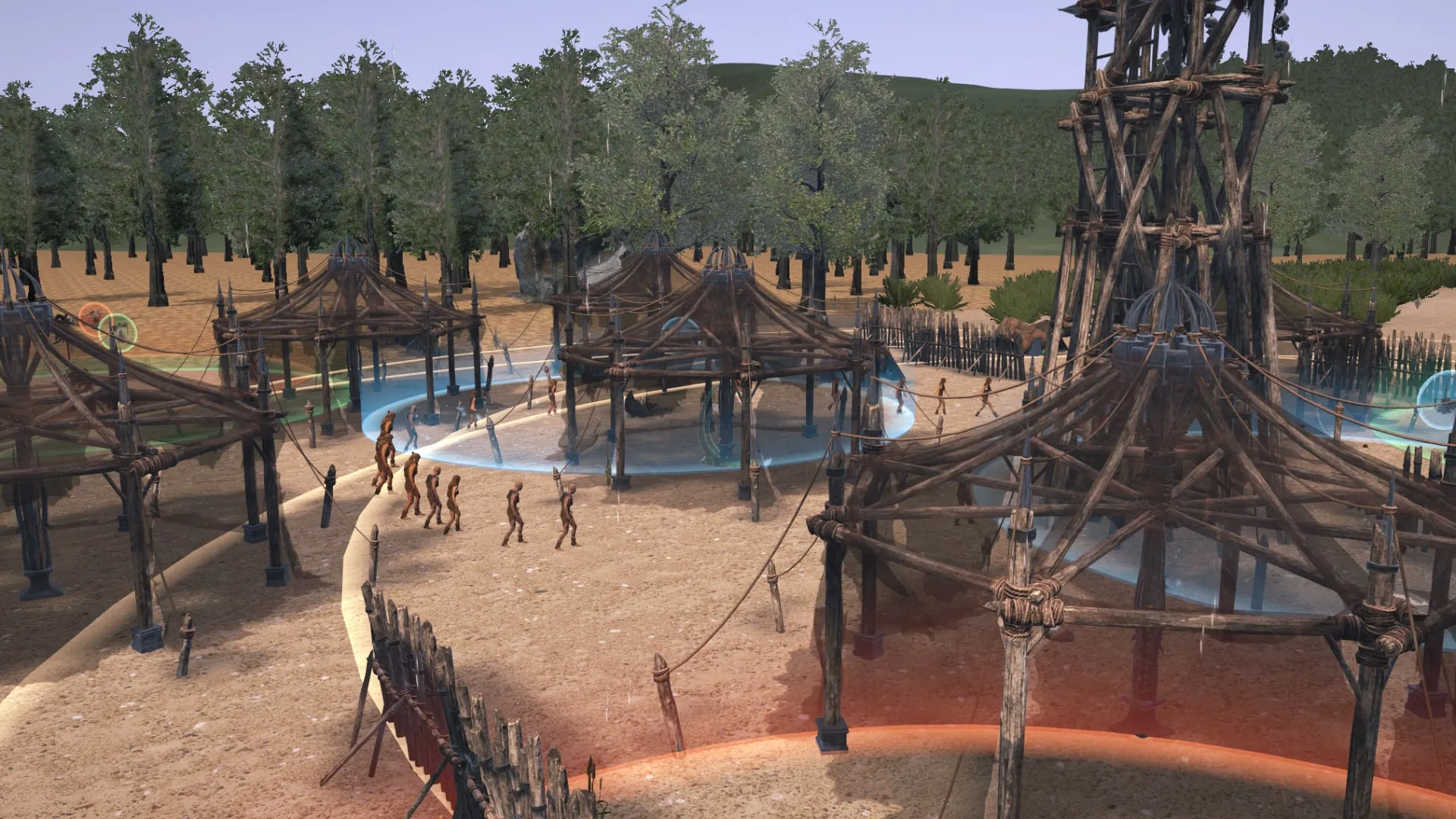
You are not a general. You are an ancestor.
The tribe does not obey orders, it obeys its dead. One idea — the player is an ancestral spirit held to the world by a totem — explains the camera, the automations, the spawn point and the defeat condition. The pillar the whole world is built on.
-
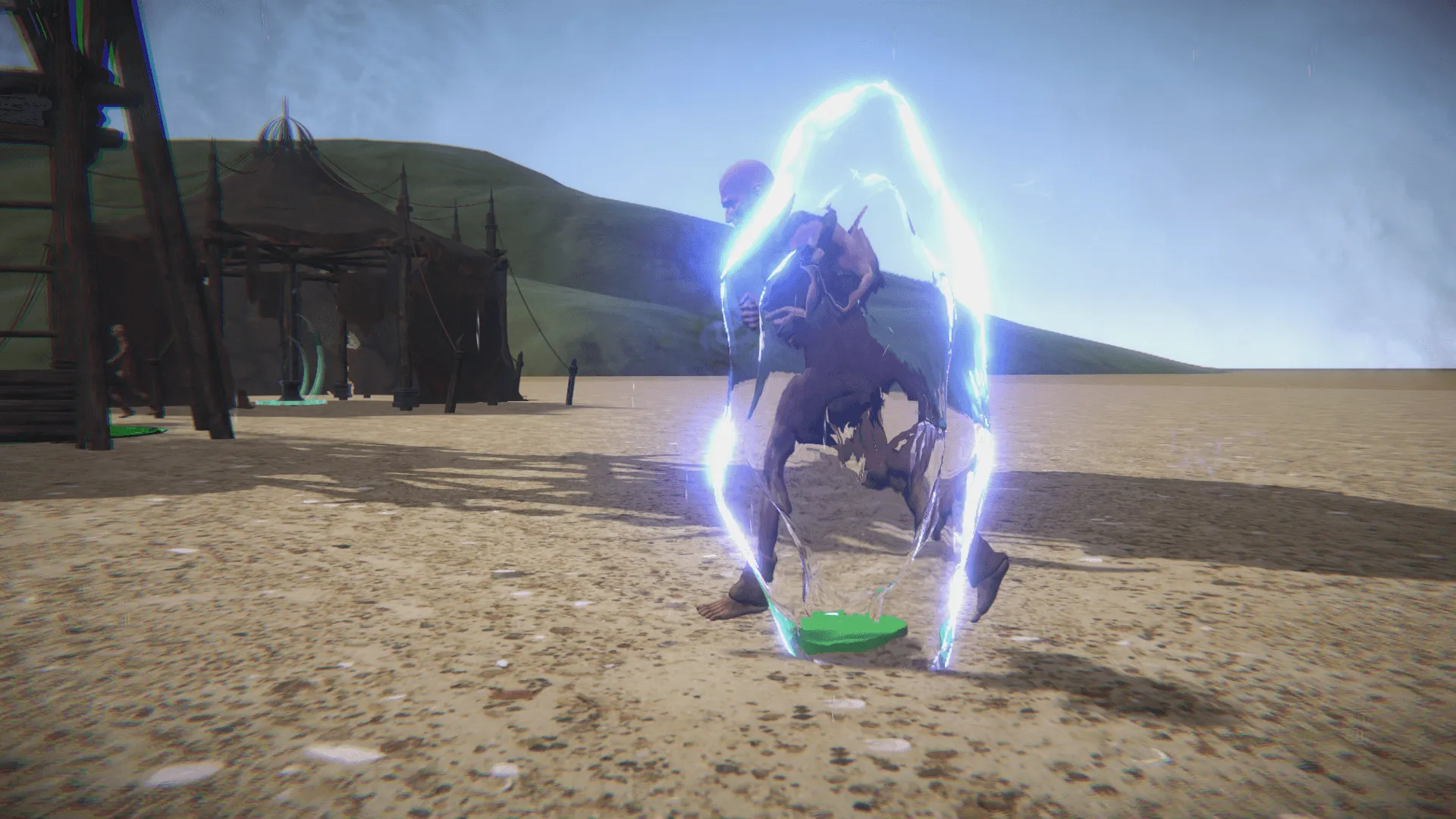
The elemental wheel: six elements, two multipliers
Fire melts Ice, Poison chokes Fire. Six elements in one cycle, a resistance that cuts damage by a third and a vulnerability that doubles it — the whole combat rule, and how to use it in a run.
-
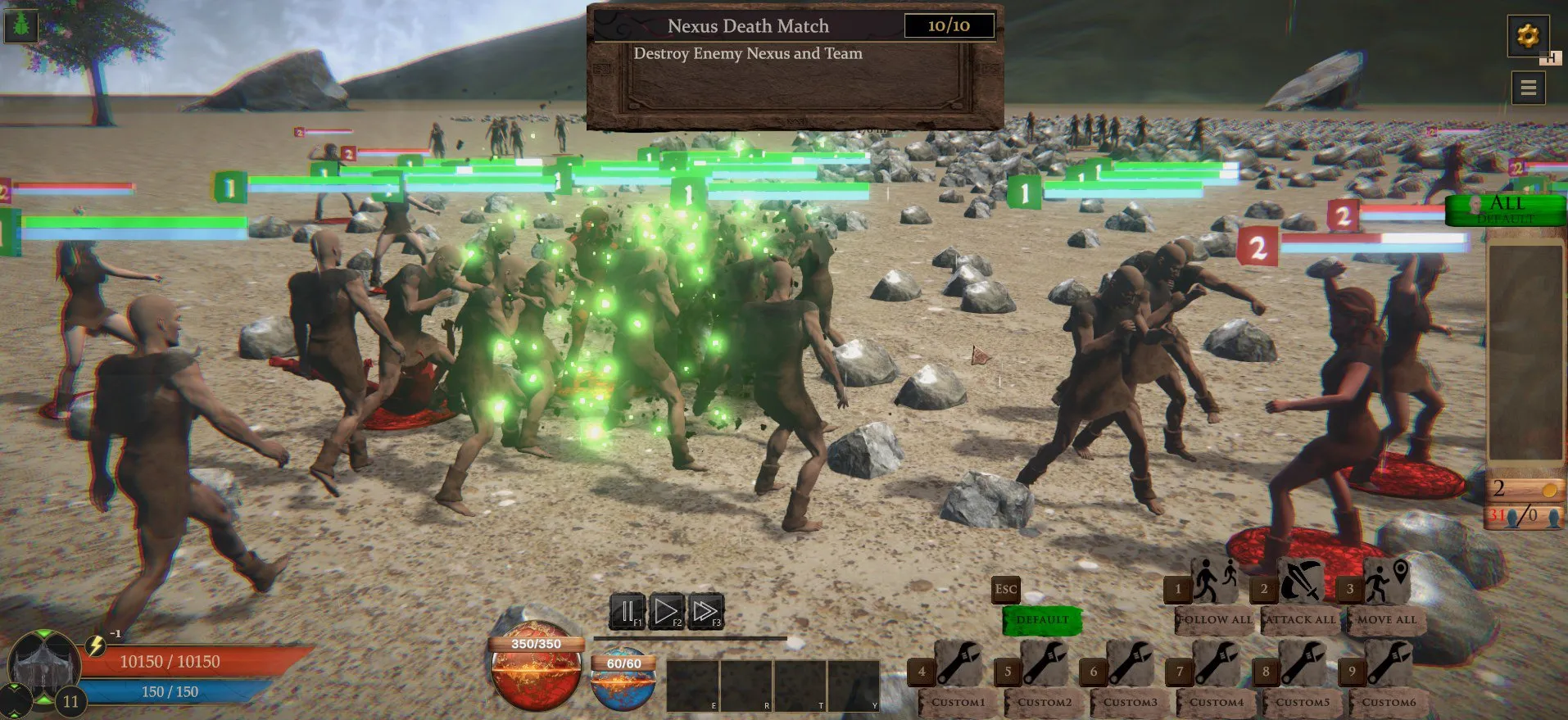
Your first behaviour: three rules, then a fourth
A practical guide to the behaviour editor: what a rule is made of, the order rules are read in, the conditions and actions worth knowing first, and how to see why a rule did not fire.