Every strategy has an answer: the counter chain
A melee rush is answered by blinding, blinding is answered by archers, archers are answered by a blind zone, and the zone is answered by a cleanse. The ladder that holds the combat together, and how to climb it one rung above whoever you are playing.
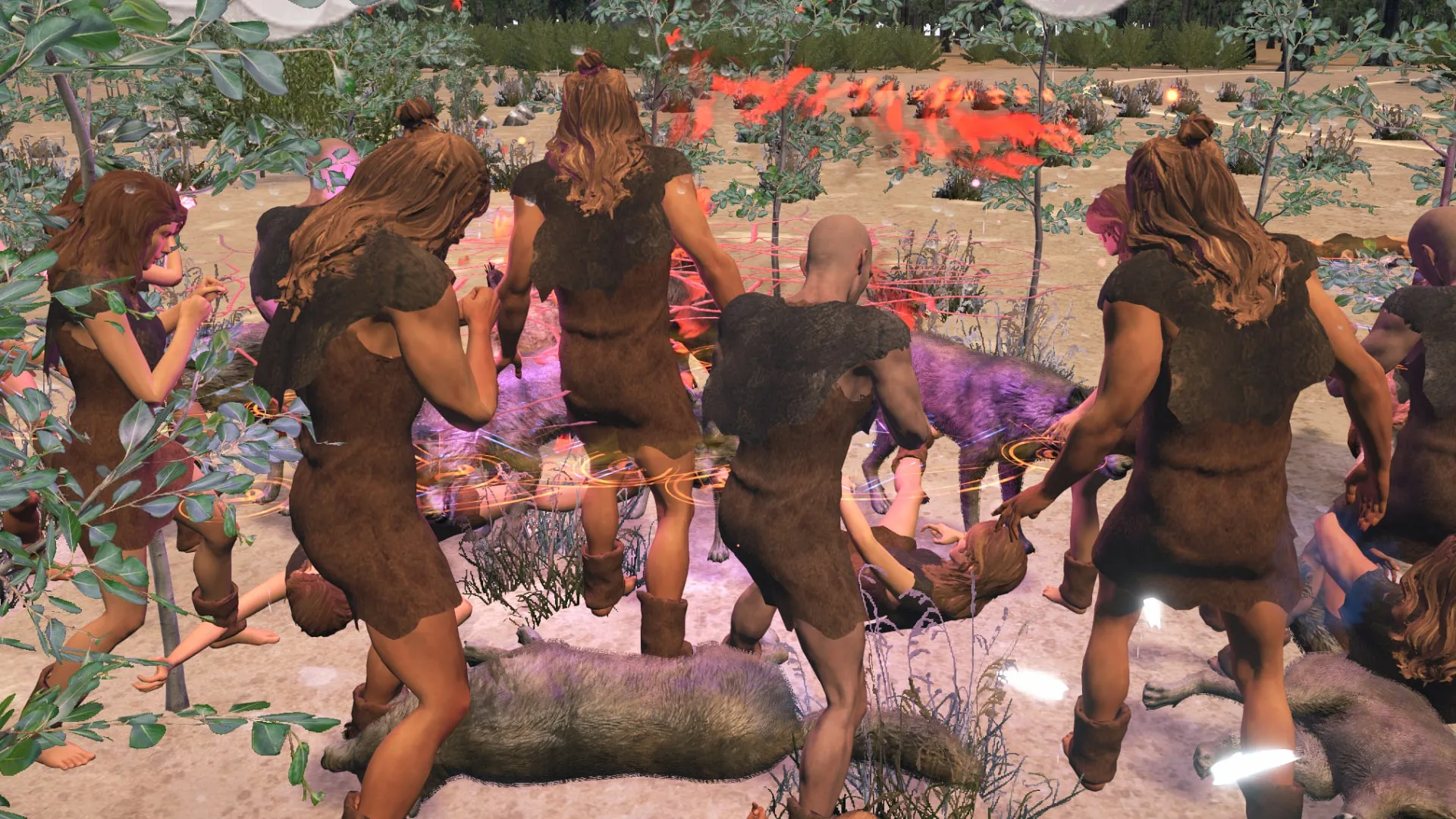
One rule sits under every piece of content in Stone Tribes: nothing is allowed in without an answer. A spell that cannot be countered is not a strong spell, it is a broken one, and it gets an answer before it ships. What that produces, over time, is a ladder — and knowing where you stand on it is most of what separates a won fight from a lost one.
Here is the ladder as it stands today, rung by rung.
1. The rush
Thirty people, one rule: attack the closest enemy. It is the first thing anyone writes and it is genuinely good. It needs no mana, it never mistimes anything, and against an opponent who has not thought about it, it simply works.
Its weakness is that it is all the same answer, thirty times over.
2. Blinding answers the rush
 Blind the Opponent does two things to whoever carries it: they miss, and
they hurt themselves on every swing. That second half is what makes it a counter rather than an
inconvenience. A blinded rush does not stall — it grinds itself down while it stalls.
The same backlash is the whole idea behind  Attack Punishment : let them
come, and let the coming be the damage.
3. Archers answer the blinding
The reach of a blinding spell is deliberately shorter than a bow. Melee happens at two to four metres; an arrow leaves at around twenty. A line of archers standing beyond the blinder’s reach takes the whole rung apart, because the counter never arrives.
This is the rung most players find by accident, after losing twice to something they could not get close to.
4. The blind zone answers the archers
 Blind Zone is the long answer: an area that blinds an entire team at a
distance, and whose radius grows a great deal with its level. It reaches past the archers and takes
their aim, which is the one thing archers cannot afford to lose.
There is a softer, permanent version of the same idea: a blinding stele, a building whose aura takes the aim of any enemy within about eight metres and keeps doing so for as long as it stands. Its own counters are honest ones: shoot it from beyond eight metres, or walk in and break it — it has a hundred and fifty points of health and no second chance.
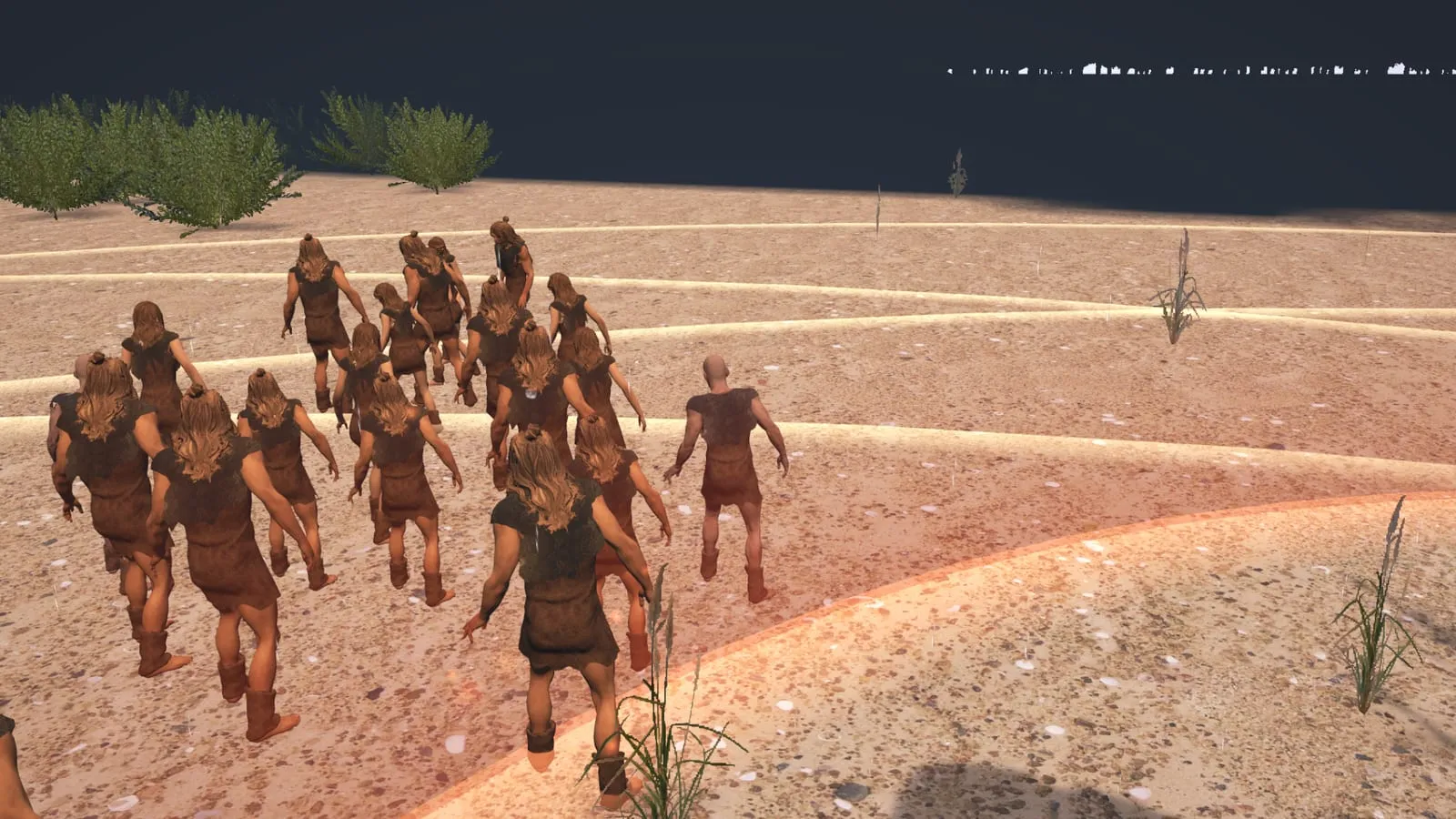
5. Cleansing answers the zone
 Cleanse lifts what was imposed. The other answer is older and simpler:
kill whoever is casting. A zone has one source; a tribe that knows to spend its burst on the caster
rather than on the nearest body ends the rung in two seconds.
The second ladder, running underneath
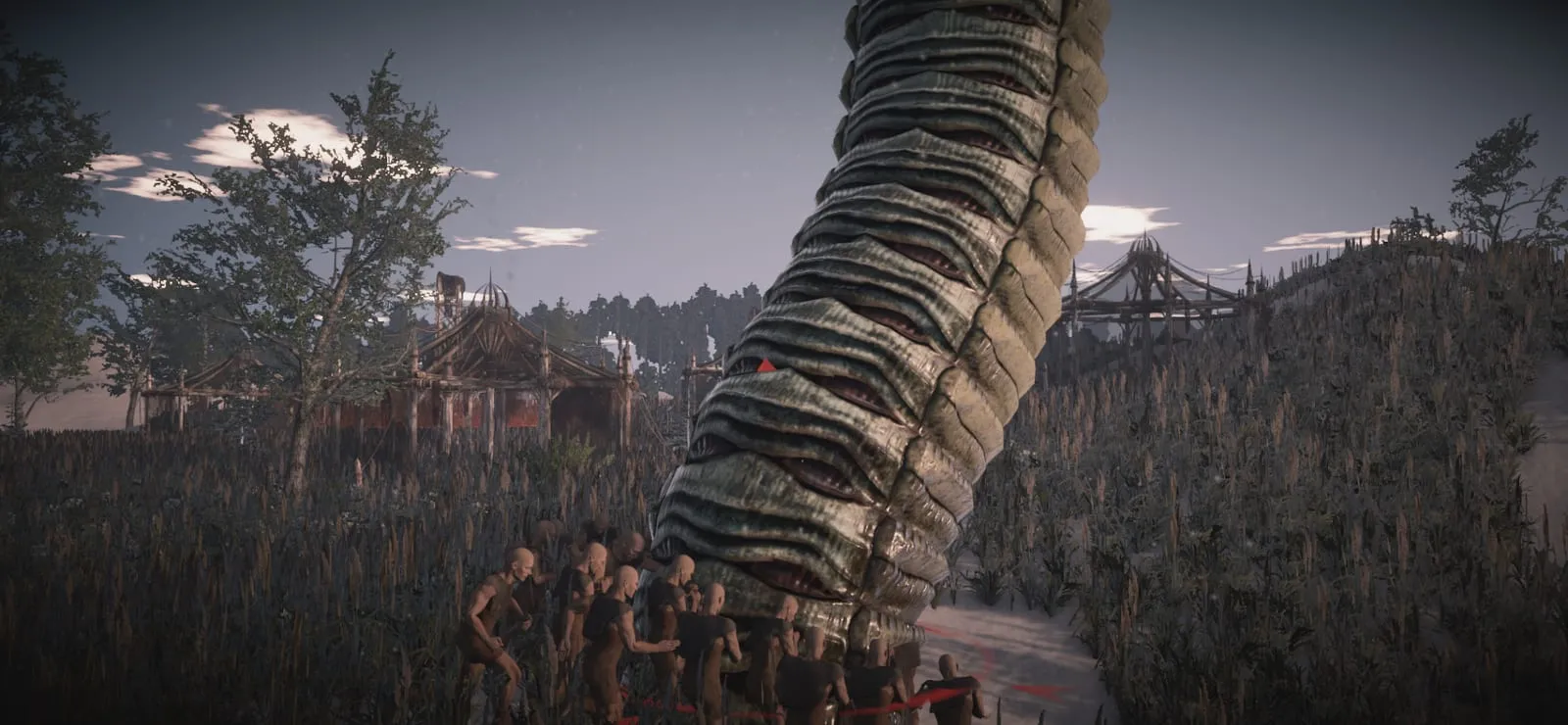
Everything above is a ladder of behaviour. There is a second one made of elements, and it multiplies rather than adds: a resistance cuts a third of the damage, a vulnerability doubles it. The elemental wheel is that ladder on its own.
The two meet at the summon totems. A totem that raises a creature of fire is itself a creature of fire, so one element counters both the building and what it produces. Scouting a camp and reading the element of its totems tells you, before you commit anything, which of your spells is worth double today.
Climbing it in a run
Identify the rung in front of you. A mass that walks at you is rung one. A mass you cannot approach is rung three. Something that takes your aim from a distance is rung four. There is no fifth thing to guess at.
Answer one rung above, not two. Writing the counter to the counter to the counter costs mana and spell slots, and loses to the plain version of the thing you overthought.
Then let it run. You do not climb this ladder with your hands. The counter is the rule you wrote before the fight, and the macro you flip during it — the only two levers you have, and between them they are enough. Your first behaviour is where the rules get written.
In the wiki


Keep reading
-
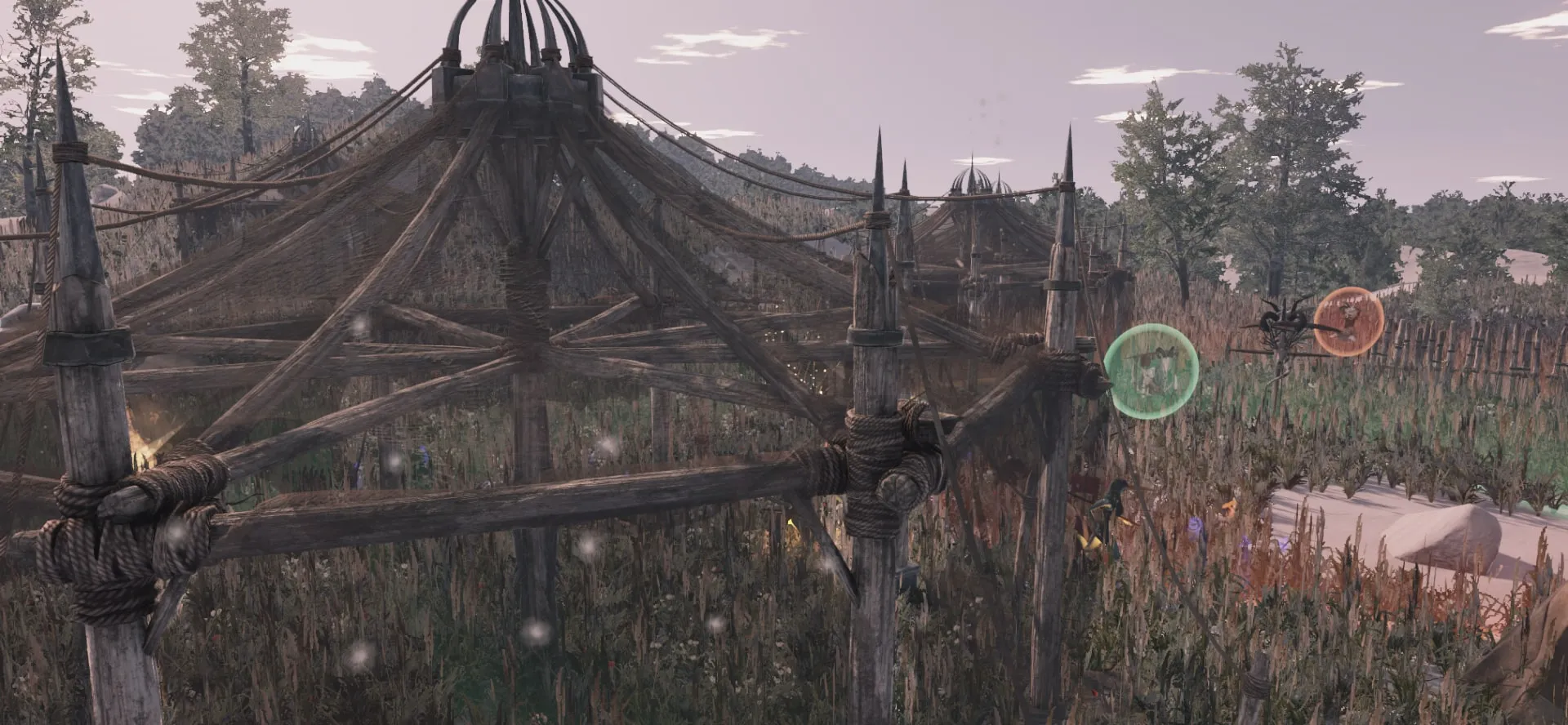
Auras, firing ranges and domes: the three circles on your ground
A circle on the ground can be an aura that buffs whoever stands in it, the reach of something that shoots, or a dome that eats arrows. Three different rules, three different counters — and the one aura whose radius grows stops just short of a bow's range, on purpose.
-
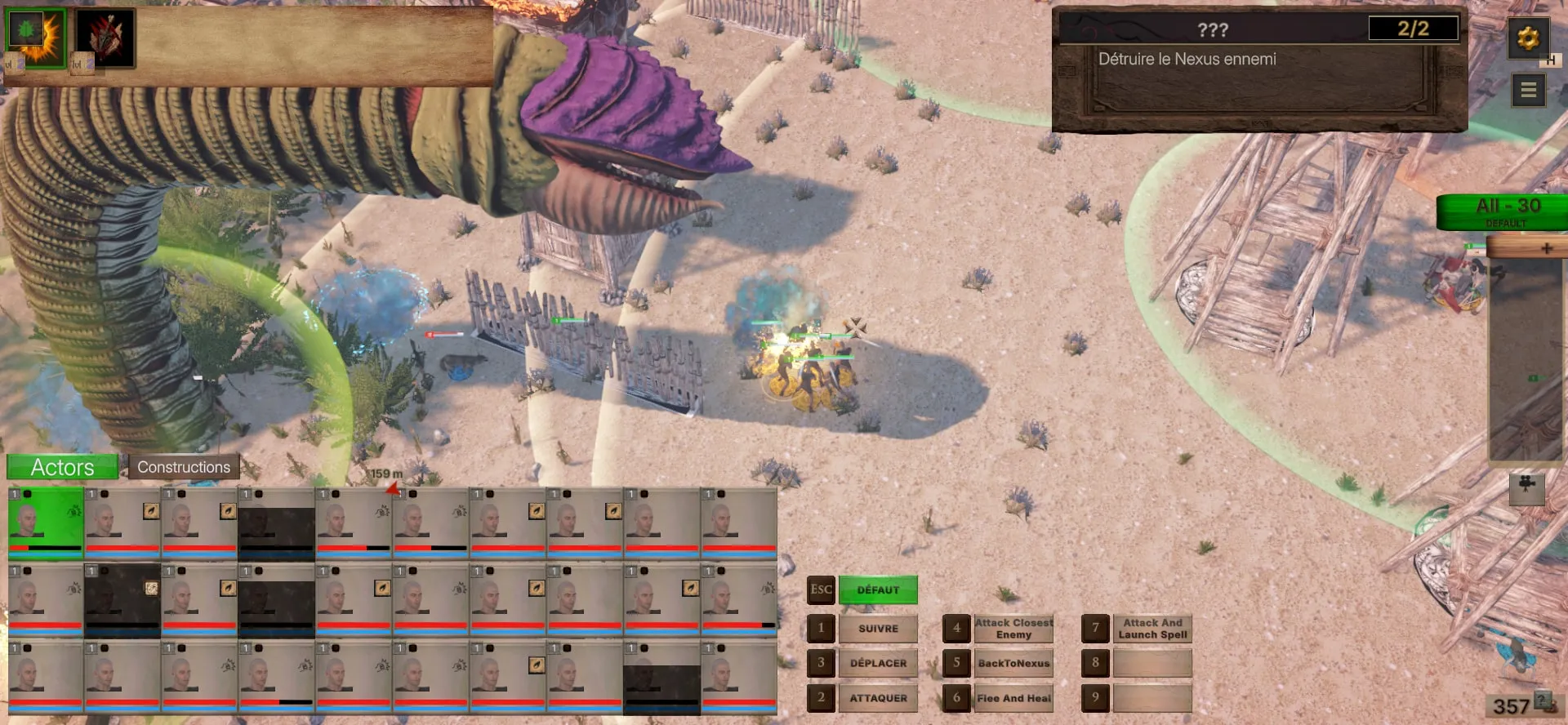
Macros and groups: what is left in your hands
You never click a unit, but two levers stay live during a fight: which behaviour a group is running, and how the tribe is cut into groups. Nine macro keys, six groups, and the three things worth watching instead of clicking.
-
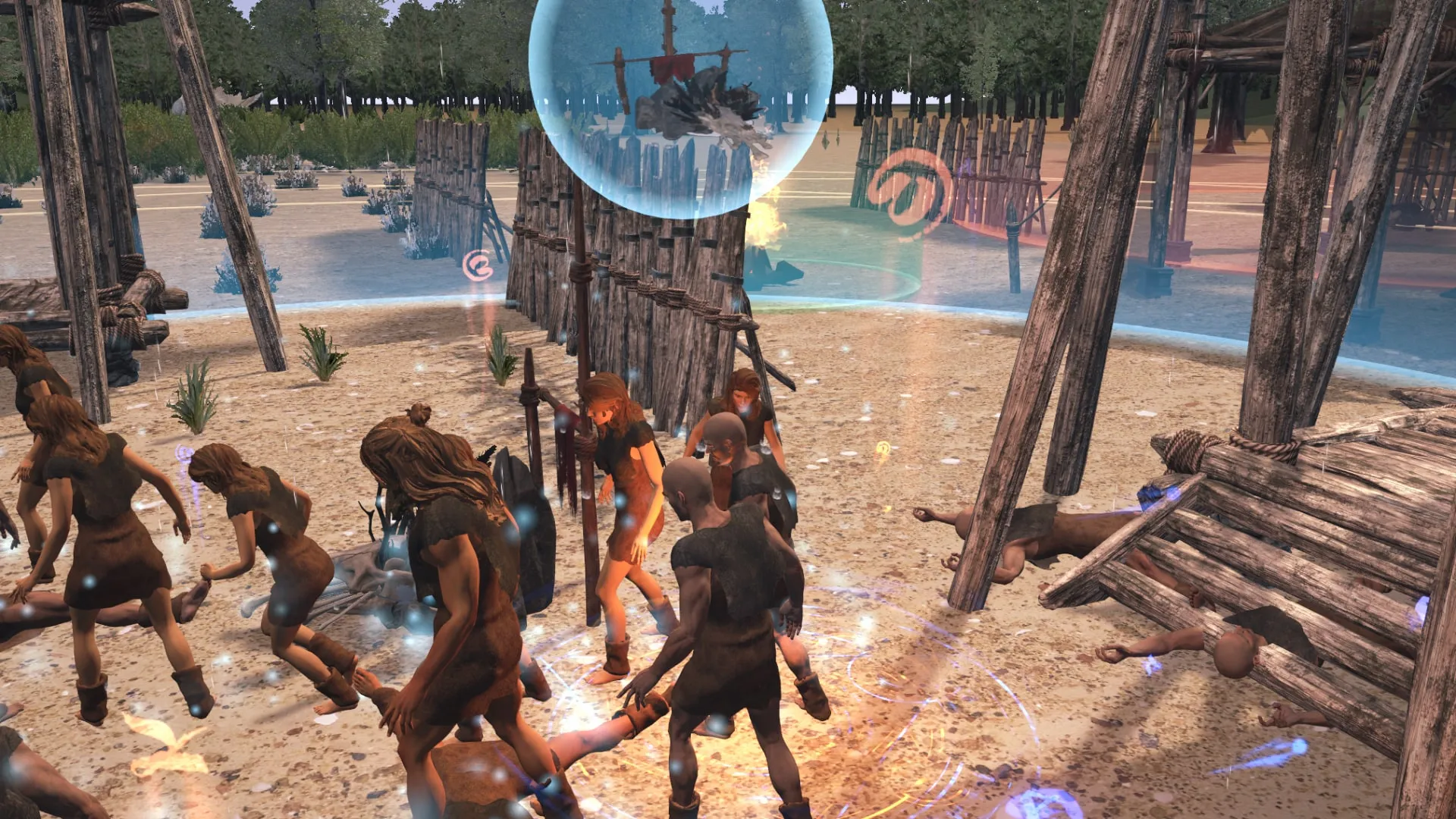
What your bag is actually doing
An item does not have to be equipped to count. The whole bag contributes, at a rate set by the weapon in hand — which makes loading one fighter a real strategy, with a real answer: everything falls on the ground when they die.