The tower that never upgraded
A defensive building could be levelled up, the window showed the cost, and absolutely nothing happened. The curves were written on a scale that runs to 254 while a building stops at 9 — so every upgrade delivered the first three per cent of what it promised.
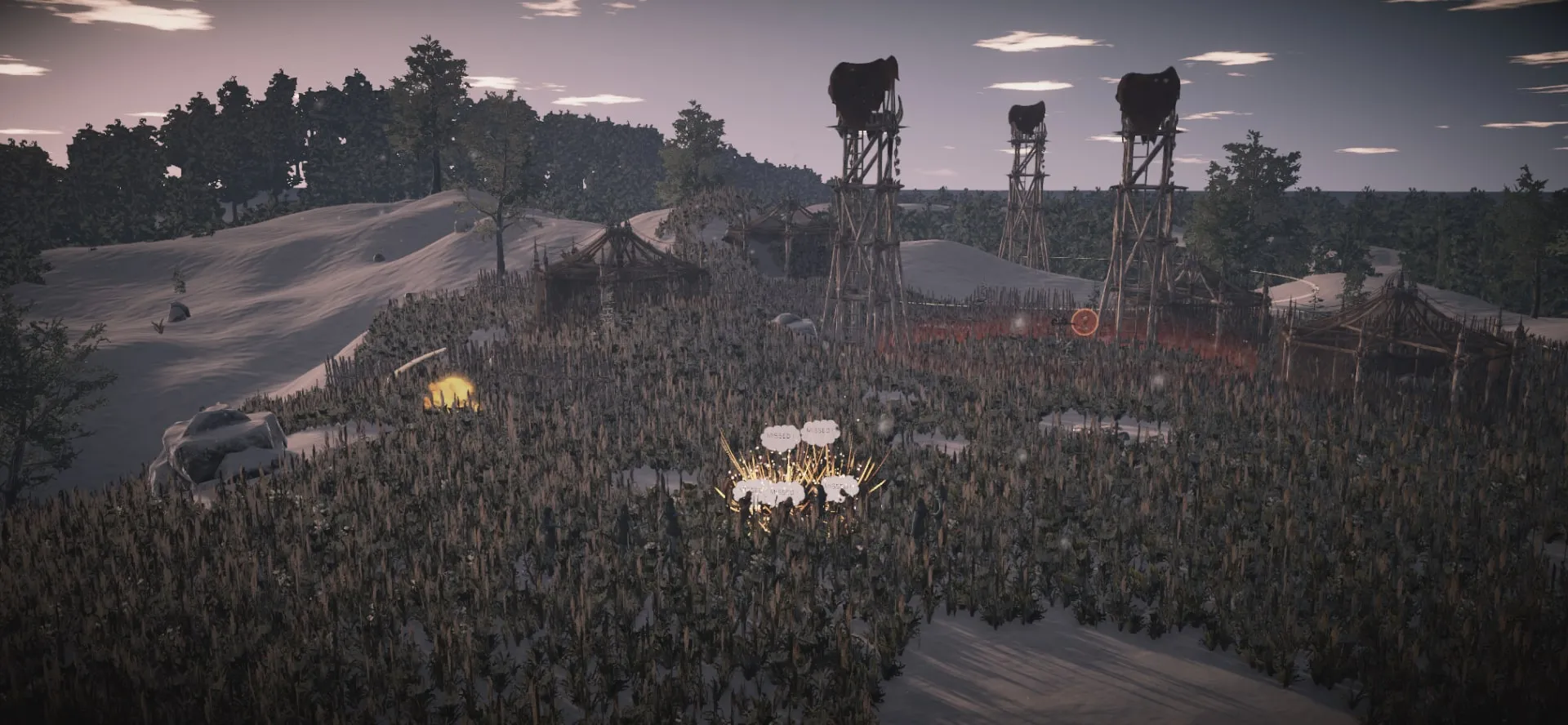
You could build a tower, pay to upgrade it, watch the level go up, and get nothing. Not a small gain — nothing. It had been that way for a long time, and the reason it survived so long is more interesting than the bug.
Two scales that never met
Everything in Stone Tribes that grows with a level grows along a curve: you author where it starts, where it ends, and the game reads the curve at the level of whatever owns it.
Actors — people, beasts — go up to level 254. Buildings stop at 9. Both were reading their curves the same way, so a building asked a curve built for 254 steps what it should be worth at step 9, and the curve answered honestly: about three and a half per cent of the way in.
What that looks like in practice, on a wall authored to fire every five seconds at level zero and every second at maximum: at maximum level, it fired every 4.86 seconds. Its projectile level, authored to climb from 0 to 3, stayed at 0 the whole way. The upgrade was real, the cost was real, the effect rounded to nothing.
The screen that told the truth
Here is the part I did not expect. The upgrade window hides any line whose value does not move — a sensible rule that stops it listing twelve unchanged statistics. A tower with no working progression therefore displayed no gain at all.
So the interface was being perfectly honest. It said: upgrading this changes nothing. It read as a building that simply had no progression, which is a thing that exists, rather than as a building whose progression was being thrown away.
The fix, and where it had to go
The repair is one line of intent: stretch the building’s nine levels across the whole domain of the curve, so level 9 means the end of the curve and not three per cent of it.
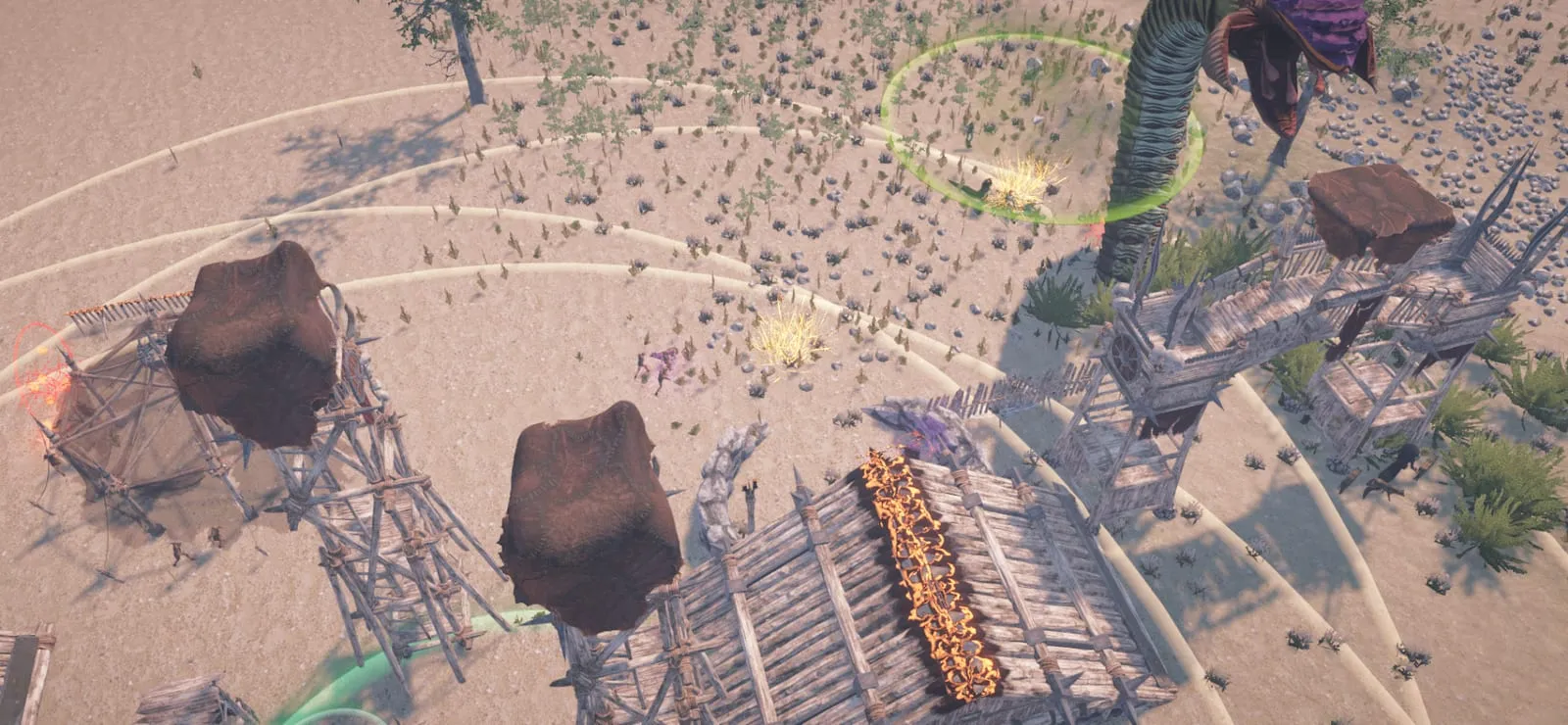
The place it goes matters more than the formula. It went inside the interpolation itself, rather than at the three places that call it — the game tick that makes the tower shoot, the preview in the upgrade window, and the ring drawn on the ground to show its reach. Fixed at the call sites, those three could drift apart, and a ring that promises a range the tower does not have is worse than the original bug: you would place your defence against a circle that lies.
What this means when you play
Two things are worth carrying into a run.
Damage comes from the projectile, not from the building. This is the one that changes decisions. The arrow tower’s arrow climbs from 30 to 500 across its levels — levelling an arrow tower is the best thing you can spend on a defence. The wall throws a stone that goes from 35 to 40: nearly flat, so you level a wall for its rate of fire, never for its damage. And the siege totem’s stone does 54 at every level, so its level cannot add a single point of damage.
The steps are coarse on purpose. A projectile level authored from 0 to 3 across ten building levels gives 0, 0, 0, 1, 1, 1, 1, 2, 2, 3. It is a staircase, not a slope: two upgrades in a row can genuinely change nothing, and the third one jumps.
Which, after all this, is the honest version of the original complaint — and now the upgrade window is a test rather than a decoration. If a line does not move when it should, something is wrong again.
The other half of a defence is where you put the circles, not how high you level them: the three circles on your ground.
Keep reading
-
The bug that only existed for the guest
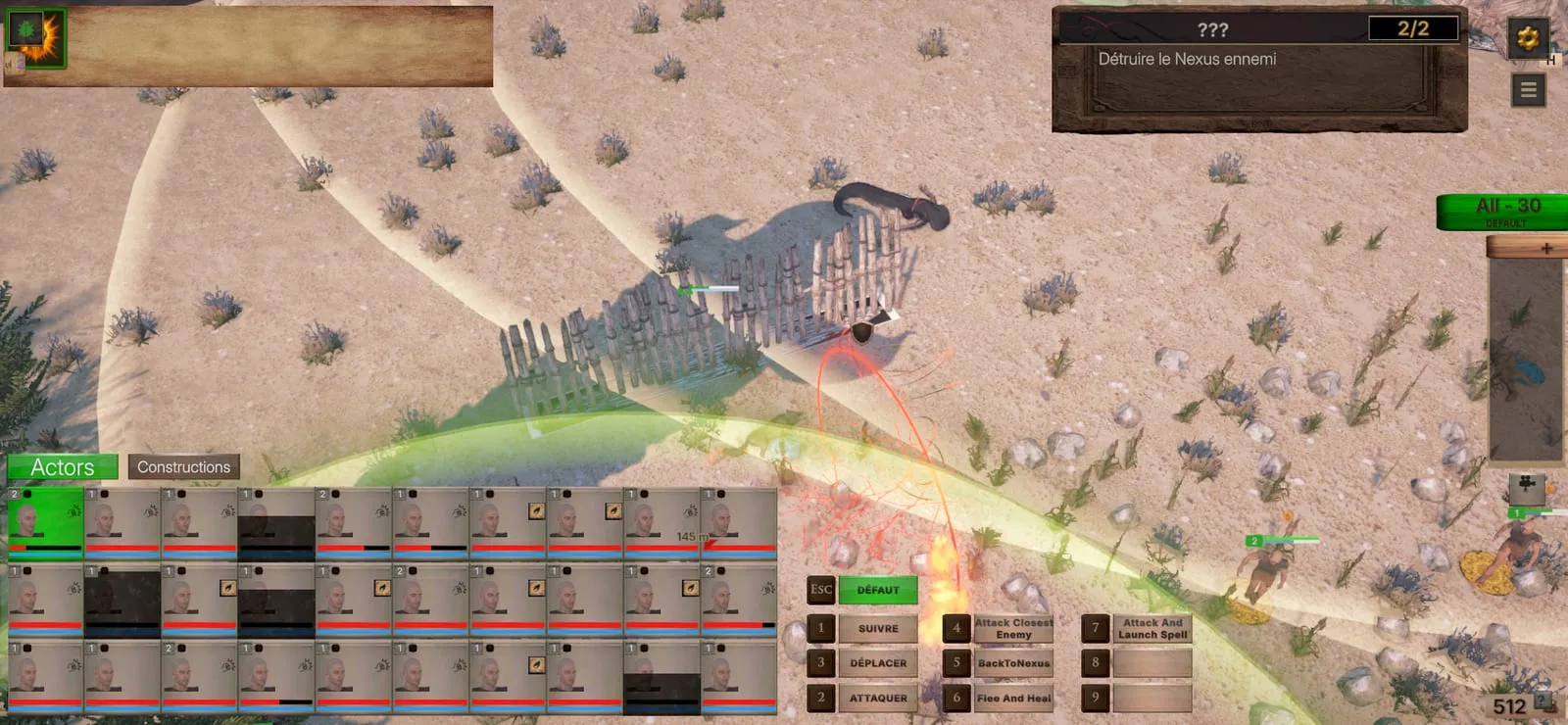
A player reported a PvP session where the cursor died, people died twice and the game kicked them out with nothing in their log. The host saw none of it. Four causes, all client-only, and the one rule that would have prevented all four.
-
The game films itself
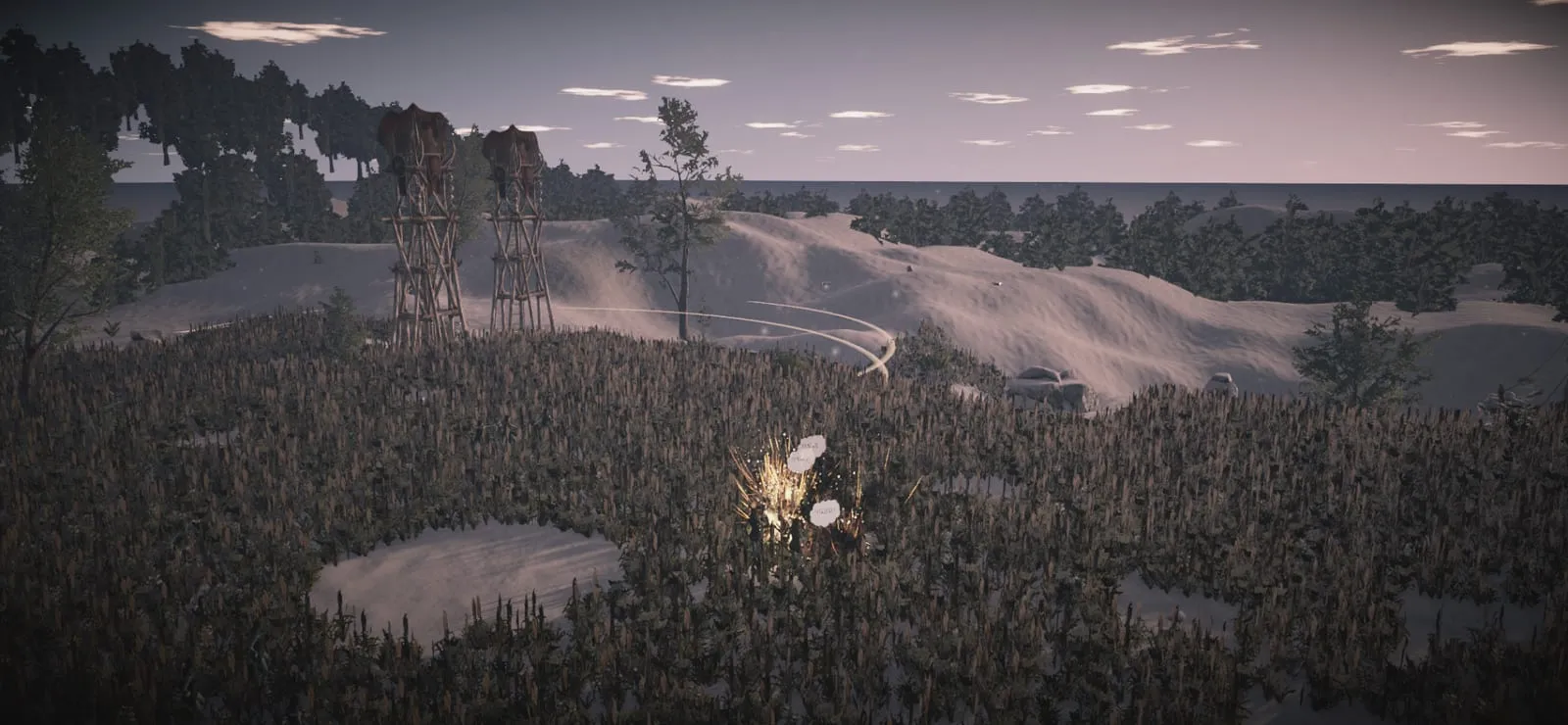
A JSON timeline drives a real match — start a game, frame the camera, run a macro, wait — while the run writes a log of every beat with its timecode. Screenshots, trailers and visual decisions all come out of the same mechanism.
-

The interface was from another game
Three panels used an opaque black button sprite as both their background and their list background, so an empty inventory read as a large black slab in a game made of wood and painted hide. Replacing that, and the audit tool that found what was actually on screen.