You are not a general. You are an ancestor.
The tribe does not obey orders, it obeys its dead. One idea — the player is an ancestral spirit held to the world by a totem — explains the camera, the automations, the spawn point and the defeat condition. The pillar the whole world is built on.
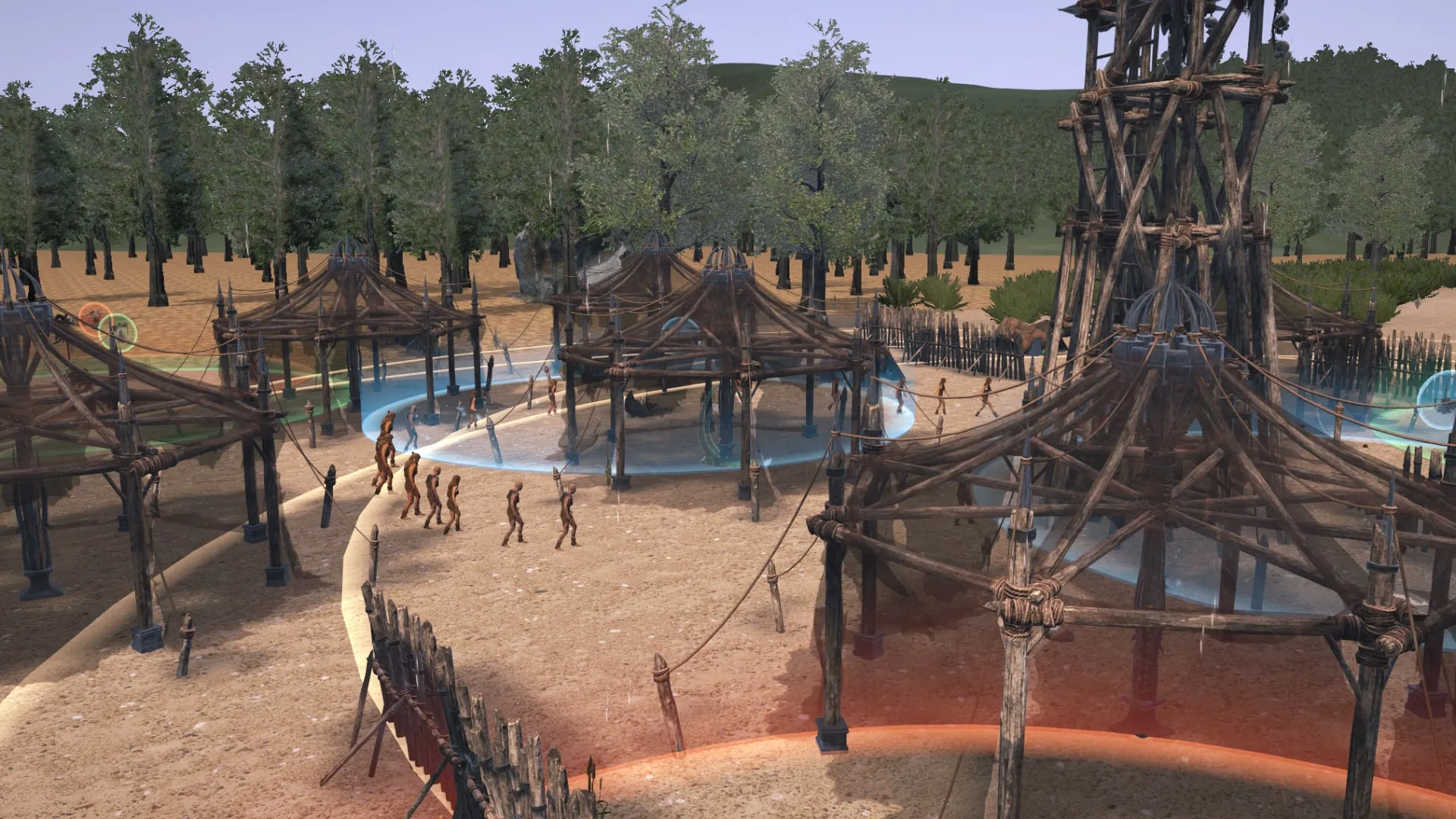
Most strategy games leave the question politely unanswered: who exactly are you, and why does anyone listen? Stone Tribes answers it, and the answer turned out to explain almost every rule in the game.
You are a dead ancestor.
The Voice
When someone great dies and refuses Skarn’s forgetting, and a totem is there to hold what is left of them, they become a Voice — an ancestral spirit bound to its own bloodline. A Voice no longer breathes, no longer grasps, no longer dies. It can do exactly two things: want, and be heard.
That is the whole of your power. It is also a precise description of the interface.
Two ways of being present
| What you do | What it is |
|---|---|
| The commander view, high above the land | The Eye From Above. The Voice hovers, bodiless, and takes in the whole ground at once. It suggests, it orders, it traces gestures. It touches nothing. |
| Following a single champion, close behind the shoulder | The Descent. The Voice consents to sink into a living champion and see through their eyes. Closer, stronger — and if the champion falls, the Voice is thrown out of them at once. |
The Descent is intimate and dangerous. While it inhabits a body, a Voice forgets a little that it is dead. Some never want to come back up, and that is how Tyrant-Ancestors are made.
The totem
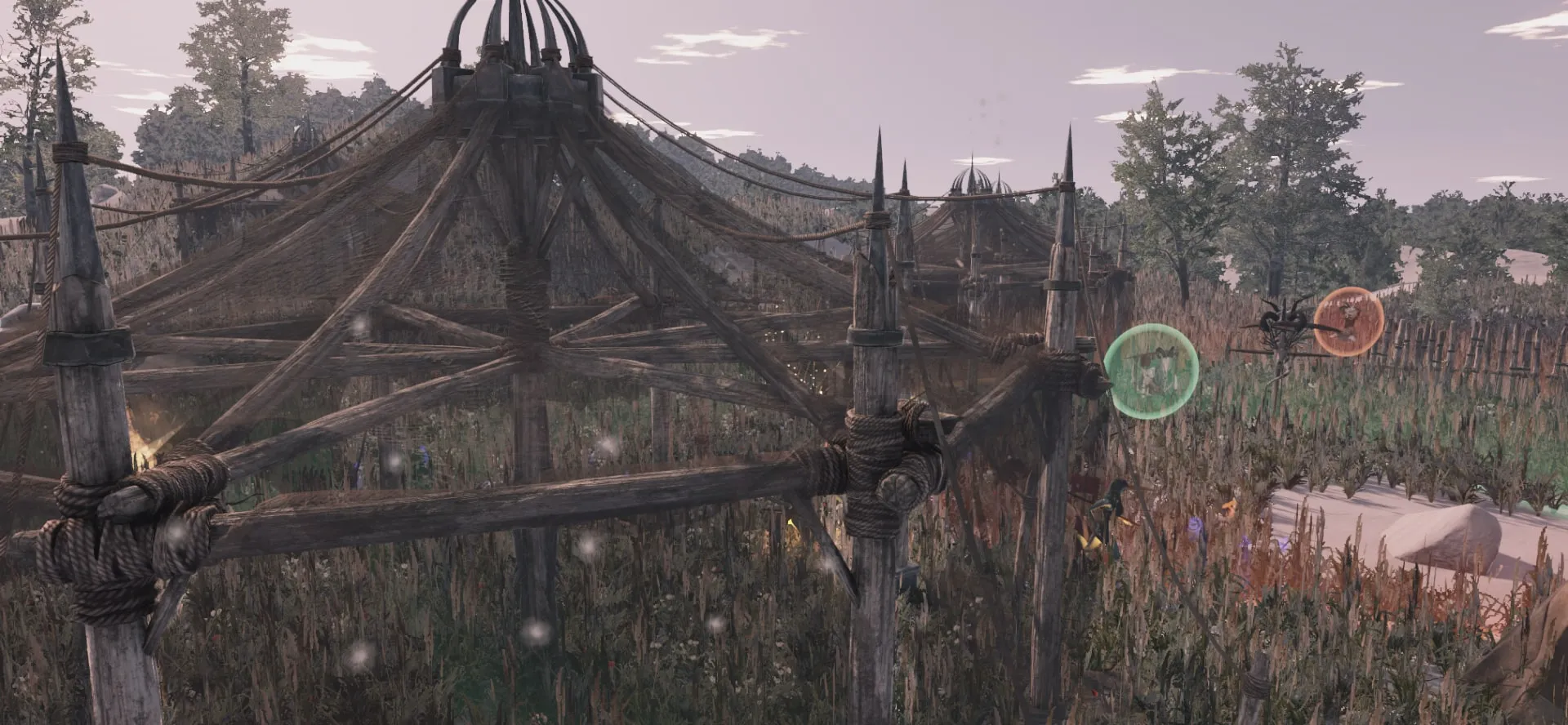
A totem is a raised stone, carved with bone and dried sap, where the breath of an ancestor is nailed to the world of the living. No totem, no Voice: the ancestor sinks into the mist.
Which makes it the heart of a tribe, in three different ways at once.
It holds. Without it there is no Voice — and no tribe.
It waters. Sap climbs faster near a living totem, which is why the ground around one heals those who stand on it.
It calls. The newborn and the returning come back to the tribe through the totem. It is where your people appear, because it is the only place they can appear.
And so the defeat condition writes itself. Felling a totem is not destroying a building: it is banishing a Voice into the mist. Nothing else in the game is final in that way.
Why the tribe obeys
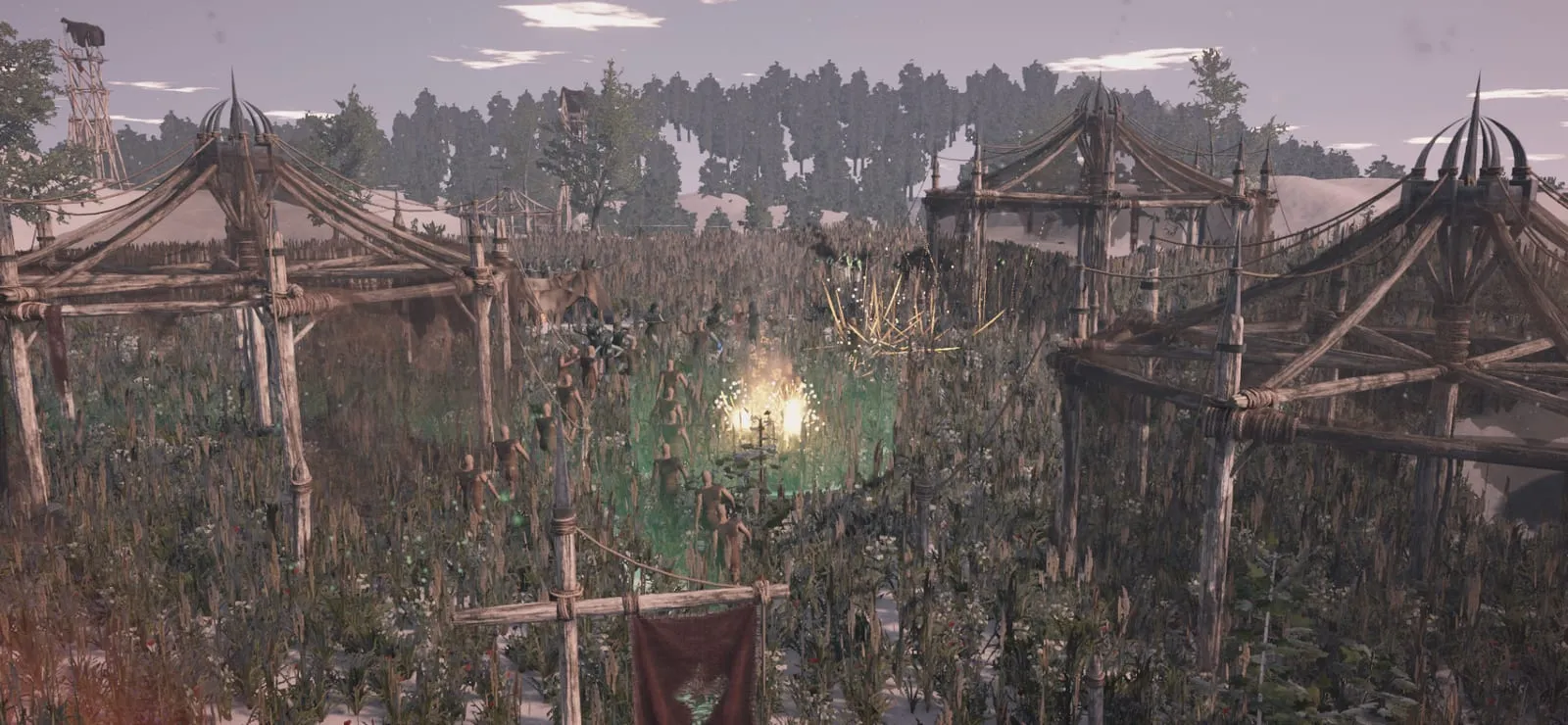
Not out of fear, and not because of any law. The tribe obeys because the Voice is its own loved and feared ancestor, and because the orders arrive from the stone itself. Disobeying the Voice means insulting your own dead, and risking that the totem goes quiet.
It follows that there are exactly two ways to be heard, and the game has exactly two.
A direct order — follow, move, attack — is the Voice breathing its will, and the living hearing it in their blood. It lasts as long as a breath does.
An automation is something else entirely: the Voice carves a hereditary gesture into the totem. The tribe will perform it by itself, from now on, without ever being asked again. Between the Voice that wants and the tribe that acts stand the Watchers, the totem-priests, whose whole craft is translating one into the other.
This is the sentence the entire game is built on. You cannot take a hand, because you do not have hands. You can teach a gesture, and then live with what you taught. Why you cannot click a unit is the same idea, told from the other side.
Not every Voice is kind
The world’s natural antagonists are ancestors who went wrong.
Tyrant-Ancestors loved the Descent until it drove them mad, and burn through their own bloodline to stay powerful. Broken-Voices had their totem felled and now wander the mist, envying the living and taking the weak. The Stilled drank too much stolen Sap and became thought turned to stone, with neither love nor forgetting left in them.
Each of them was, once, exactly what you are now: someone’s dead ancestor, watching from above, hoping to be obeyed.
Keep reading
-
Flesh that forgets, stone that remembers too much
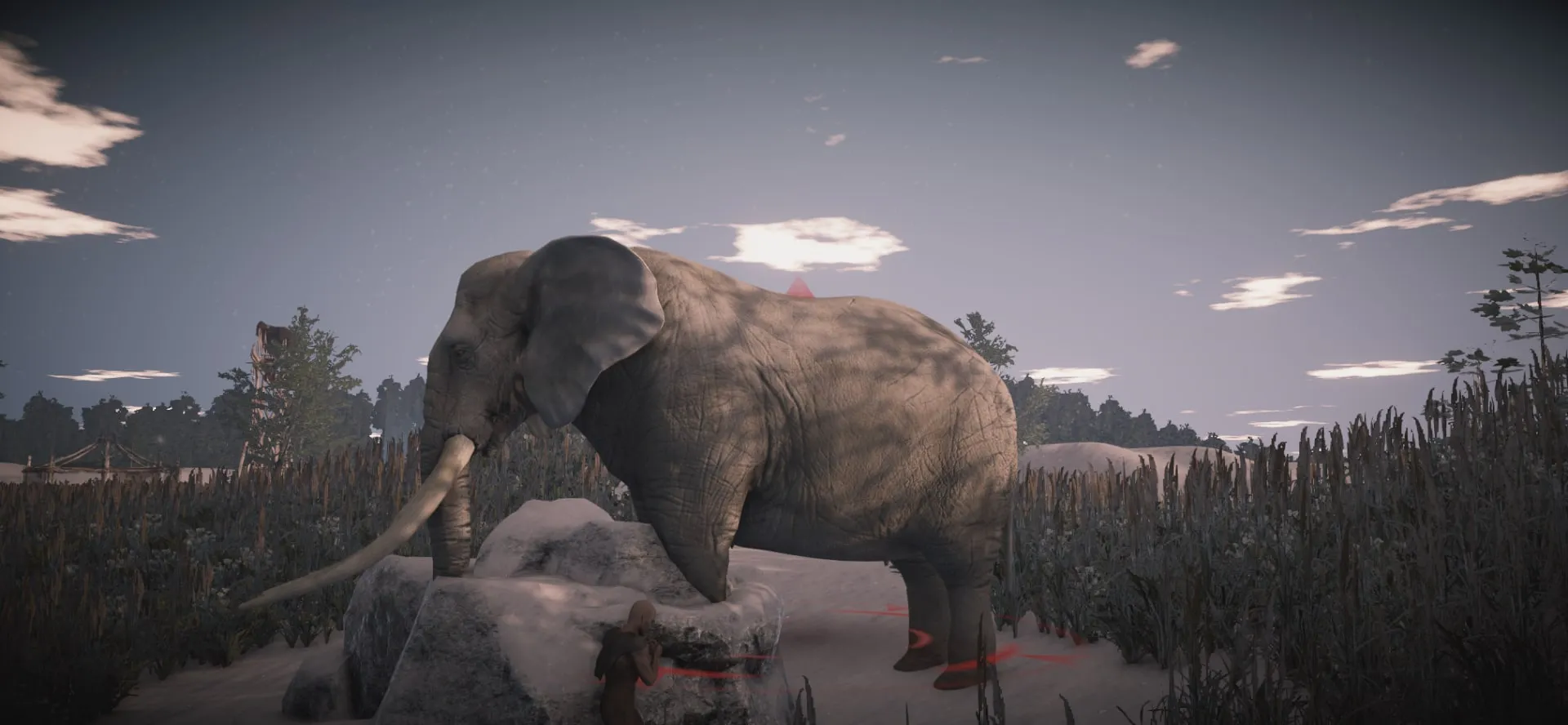
There are no species in this world, only three ways of being alive, depending on which of the Three First runs strongest in a creature's sap. The flesh-born, the nameless beasts, the woken stone — and the five tribes that argue about which one is right.
-
Sap and mana: magic is a conversation, not a resource
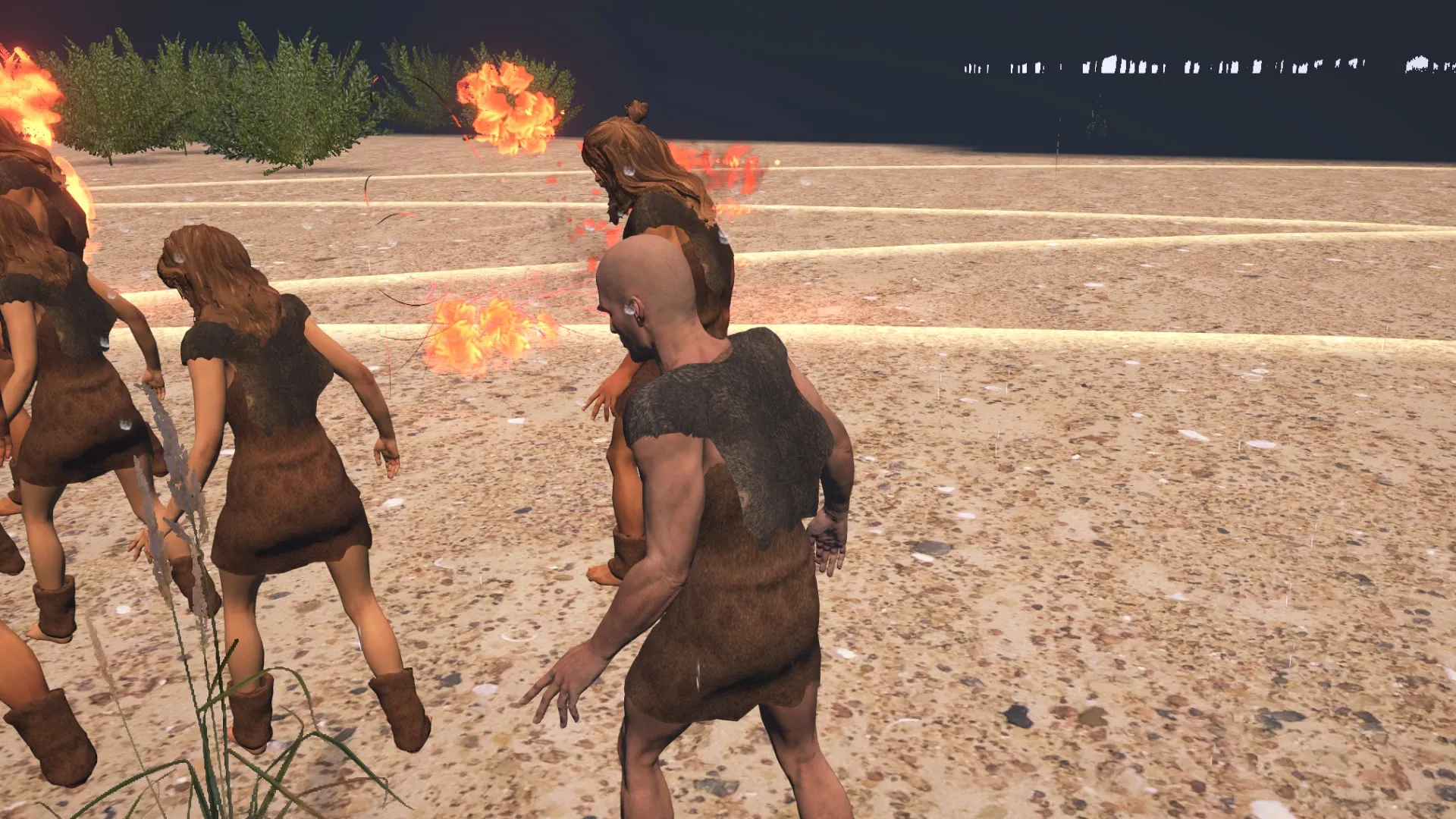
The blue bar is condensed Sap, the blood of a living world. Casting time is how long the world takes to listen, a cooldown is the world keeping quiet, and a curse is a debt owed to the mist. The fiction under the magic system.
-
Auras, firing ranges and domes: the three circles on your ground
A circle on the ground can be an aura that buffs whoever stands in it, the reach of something that shoots, or a dome that eats arrows. Three different rules, three different counters — and the one aura whose radius grows stops just short of a bow's range, on purpose.