Macros and groups: what is left in your hands
You never click a unit, but two levers stay live during a fight: which behaviour a group is running, and how the tribe is cut into groups. Nine macro keys, six groups, and the three things worth watching instead of clicking.
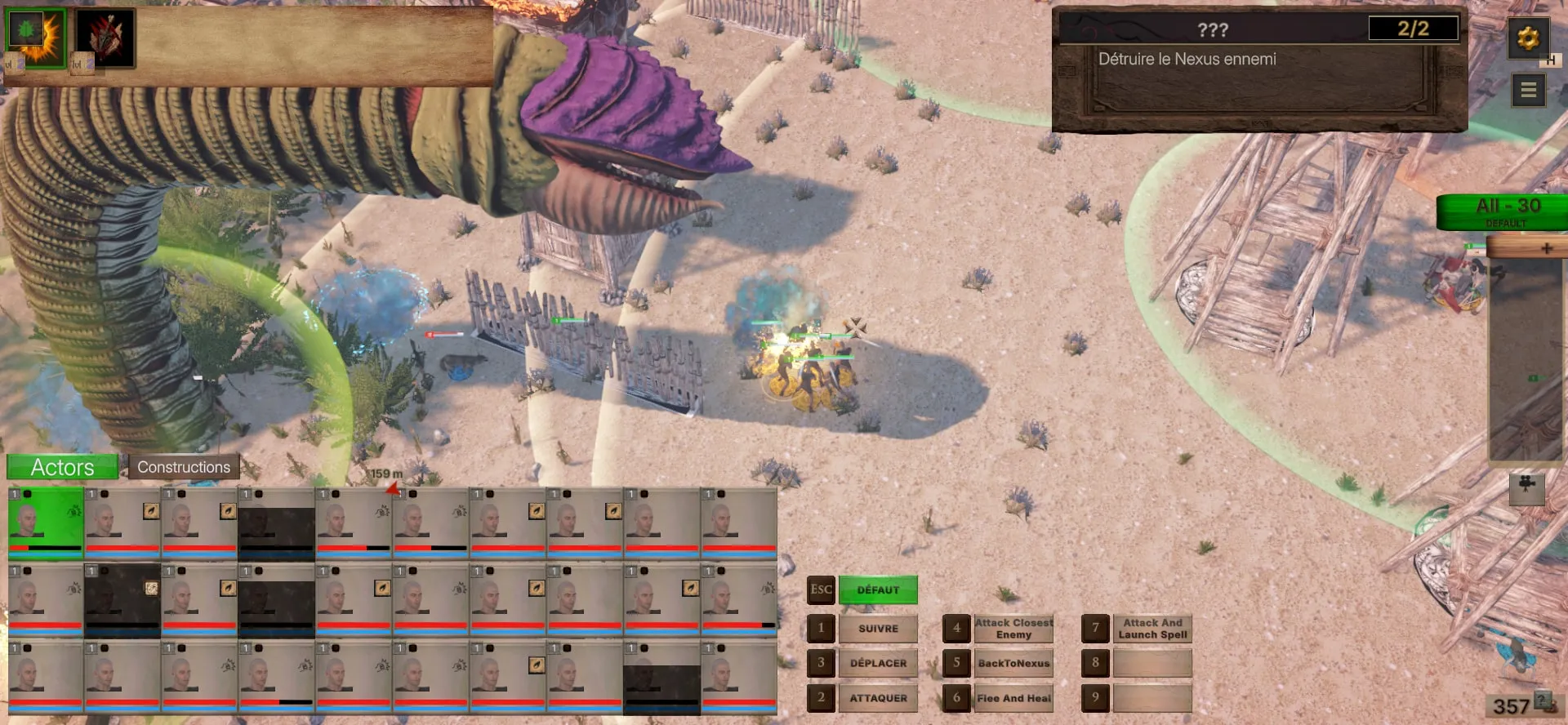
The usual objection to a game where you cannot order a unit is that there is nothing left to do. There is. It is just not the thing your hands are used to.
Two levers stay live while the fight runs: the macro a group is executing, and how the tribe is cut into groups. Everything else was decided before.
The nine keys
The bar along the bottom holds nine macros, on keys 1 to 9.
Three are fixed and do what they say: follow, move, attack. They are the blunt instruments, and they are what you reach for when something has gone wrong.
The other six are slots you fill yourself with behaviours — attack the closest enemy, flee and heal, back to the nexus, attack and launch a spell. These are the interesting ones, because each is a whole posture, not an order. Pressing one does not tell anyone where to go; it changes what they are deciding for themselves.
Your spells sit on E, R, T and Y, which is the other thing you do live.
Switching posture mid-fight
This is the move the whole design is built around. In the middle of an engagement you can take a group from we bleed them from range to everything in, and then back. You never touched a unit: you changed the rule they are each applying, and twelve people changed their minds at once.
Learning when to do it is the skill. Three signals are worth more than the rest:
Your front line crosses the threshold your flee rule uses. You wrote that rule; you know the number. Watch the health bars approach it and decide whether to let it fire or pre-empt it.
The enemy commits their caster. A zone or a heavy spell has a source, and the moment it starts is the moment a burst posture is worth twice what it was a second earlier.
A group is doing nothing. That always means the same thing: its macro no longer matches the fight. Idle people are an interface telling you something.
Groups, up to six
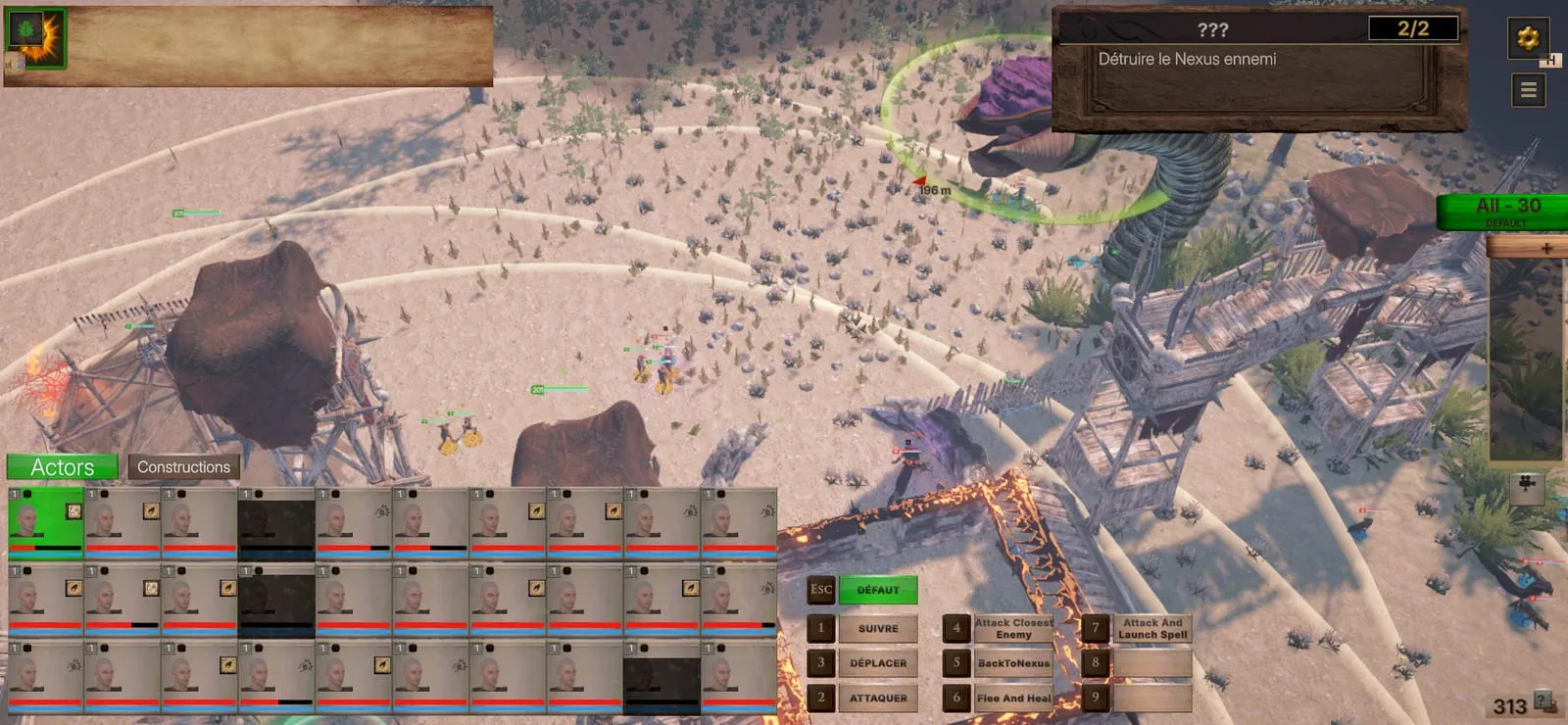
Drag a selection rectangle to make a group. Right-click someone’s card in the roster to put that one person in a group of their own — useful for a caster you want to keep on a different posture from everyone else. The backtick key cycles through them.
Each group shows its name and its headcount on a chip, and its members get a ring drawn on the ground, so you can see at a glance who is answering to what.
The cap is six groups plus All, and the reason is honest: past six, a group could be selected without its contents being displayable anywhere. A limit chosen by what the interface can show, rather than by a balance argument.
A practical cut of a tribe
For a thirty-person tribe, three groups cover nearly everything:
The line — whoever has the armour. They hold the fixed attack macro most of the time, and exist so that the next two do not get touched. Which classes belong here is a question of two numbers.
The range — archers and casters, on a posture that keeps distance and flees early. This group is the one you switch most often, because it is the one whose correct answer changes with what the enemy does.
The work — anyone crafting, building or carrying. They are on their own macro so that an attack order to the rest never drags them into the fight.
Then write the rules those groups run, which is the other half of the game: your first behaviour.
Keep reading
-
Auras, firing ranges and domes: the three circles on your ground
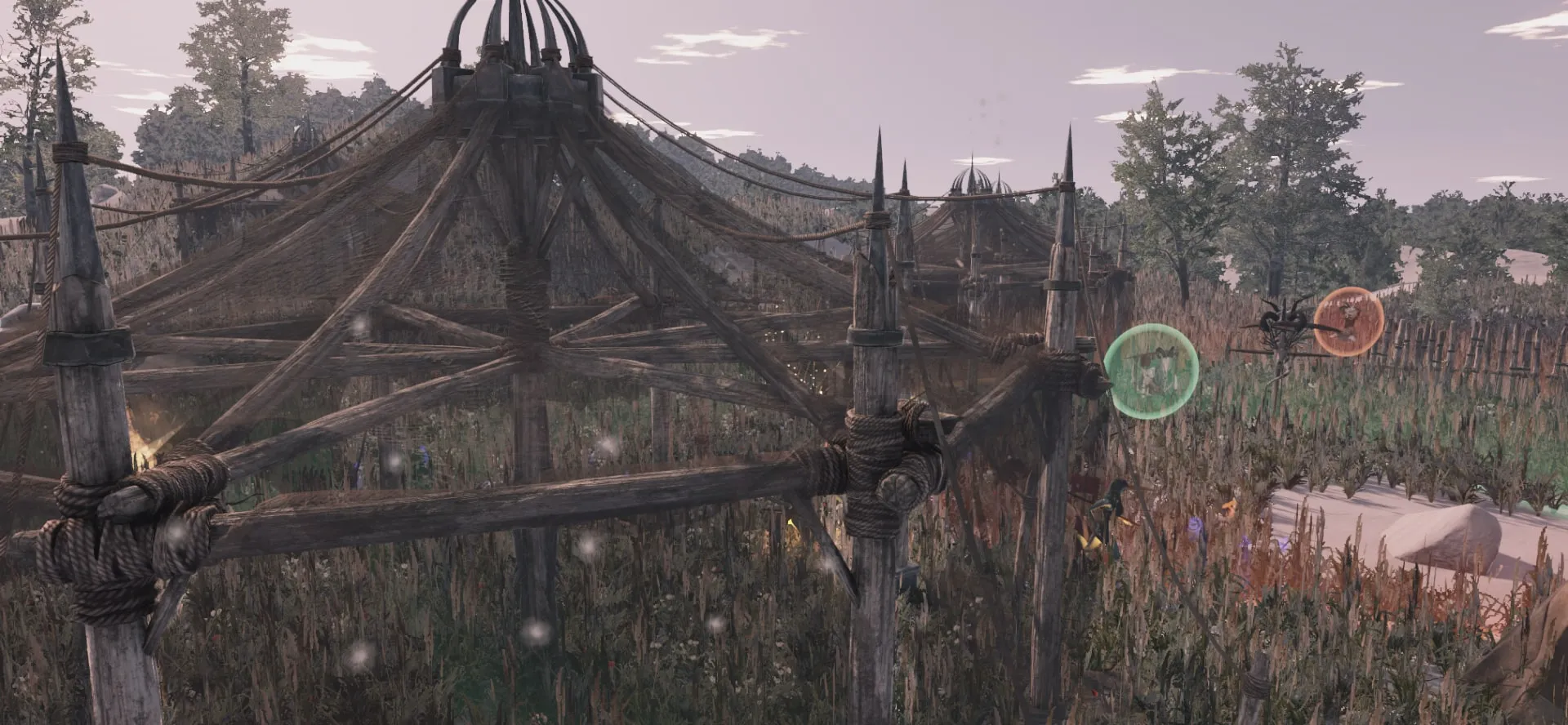
A circle on the ground can be an aura that buffs whoever stands in it, the reach of something that shoots, or a dome that eats arrows. Three different rules, three different counters — and the one aura whose radius grows stops just short of a bow's range, on purpose.
-
What your bag is actually doing
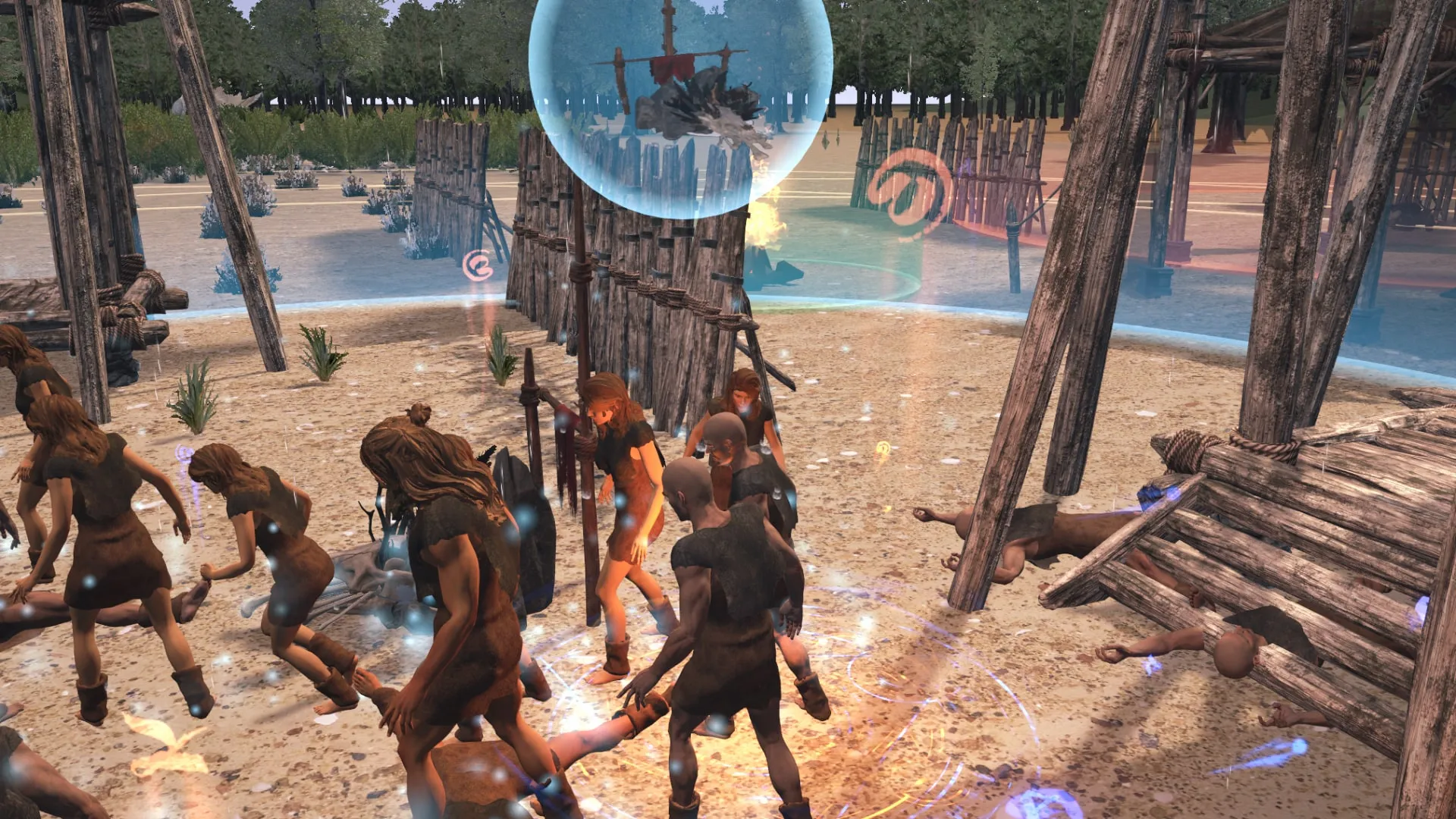
An item does not have to be equipped to count. The whole bag contributes, at a rate set by the weapon in hand — which makes loading one fighter a real strategy, with a real answer: everything falls on the ground when they die.
-
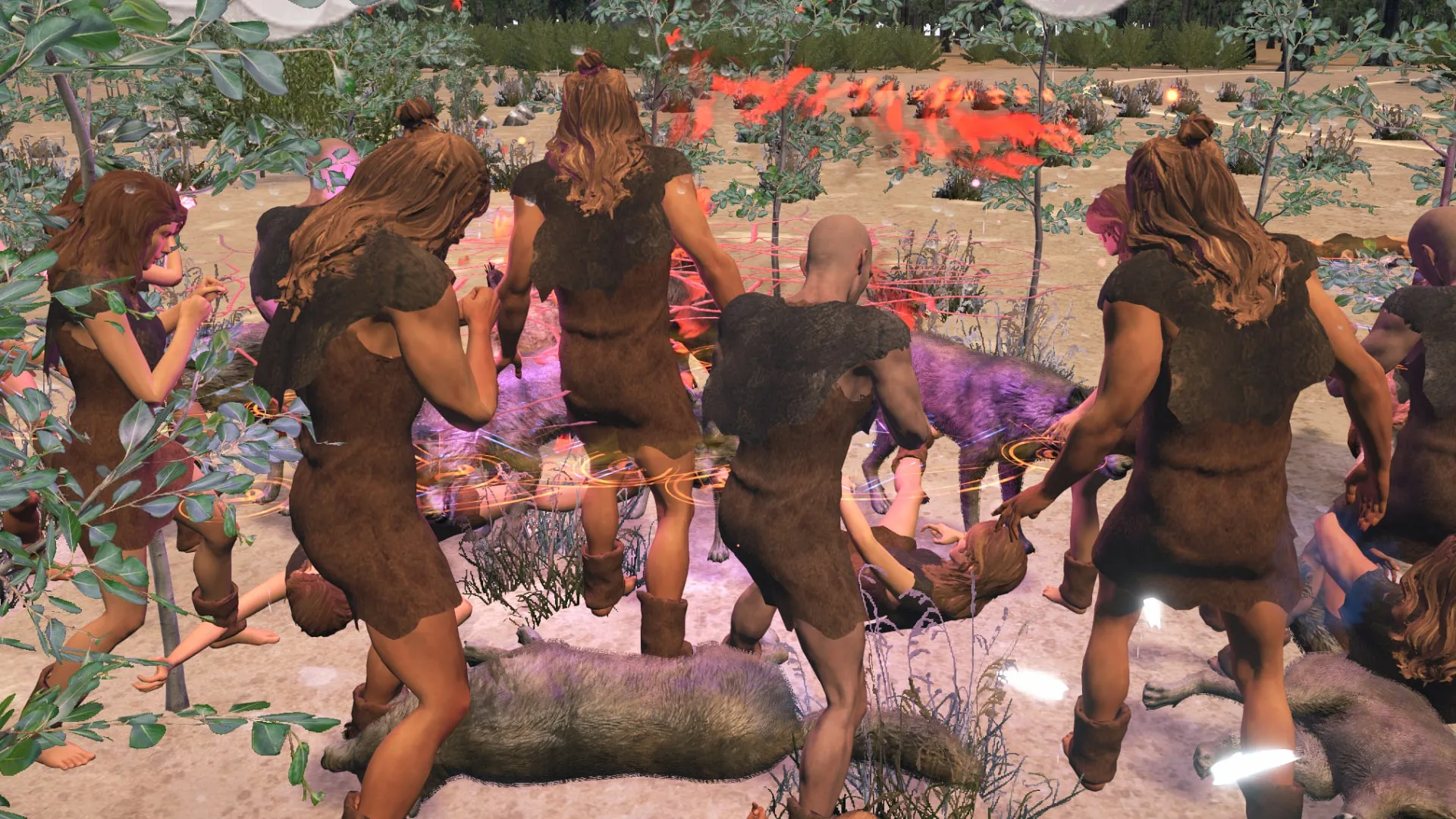
Every strategy has an answer: the counter chain
A melee rush is answered by blinding, blinding is answered by archers, archers are answered by a blind zone, and the zone is answered by a cleanse. The ladder that holds the combat together, and how to climb it one rung above whoever you are playing.