Two suns, and the hour the world stopped at
Two maps were lit by two suns at once, and the one casting the shadows was not the one the weather system thought it owned. Fixing that meant choosing a single hour for the whole game — and the choice was made by photographing every map at five of them.
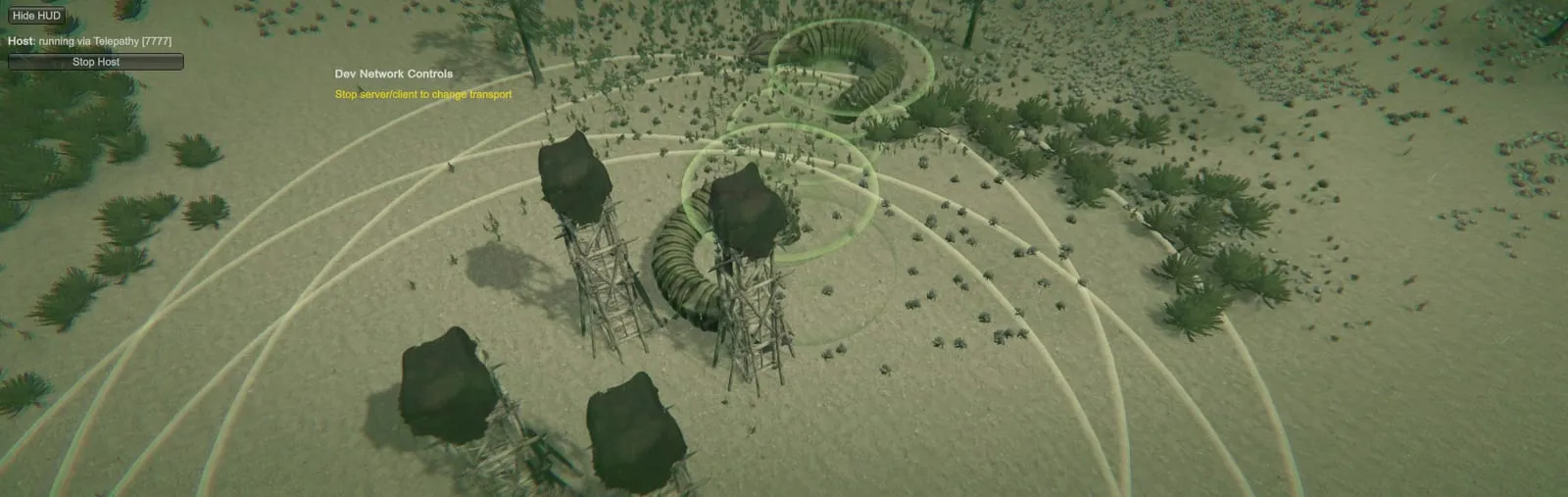
The game looked flat and I could not say why. Everything was lit, nothing was wrong in an obvious way, and every screenshot came out slightly washed. The answer turned out to be that two of the maps had two suns.
One of them owned the shadows
Stone Tribes runs a weather and sky system that has its own sun, driven by the time of day. Two maps also had their own fixed directional light placed in the scene years ago, and that second one was the one the renderer treated as the sun — so it owned the shadow map while the weather system believed it was in charge.
The result is not a double shadow, which would have been obvious. It is a map lit from two directions at once: ambient light from everywhere, shadows from somewhere else, and no single direction strong enough to give anything a shape. Flat.
Maps now switch off their own directional lights at start and hand the sun back to the weather system, with an opt-out for any map that genuinely wants its own.
Then: which hour?
Maps are frozen at one time of day. That is deliberate — a changing sky in a twenty-minute match means a fight that ends in different light than it started in, and a map that is readable at noon and unplayable at dusk. But the frozen hour was 8:00 because it had always been 8:00, and nobody had ever checked.
So I checked. Every production map was photographed at 8, 10, 13, 16 and 18 hours with the same camera framing, driven by a scripted run so the shots are actually comparable.

Eight in the morning won, and not narrowly: it has the longest crisp shadows, the warmest colour and the best contrast on every map. Ten to thirteen sit under a milky haze the sky system produces around midday. Sixteen is bluer and flatter. Eighteen is simply too dark to play in.
No scene changed. The default was right all along; what it lacked was a reason. That is worth the hour it cost: the next person who wonders whether the game should be set at noon has a strip of images instead of an argument.
The rest of the pass
With one sun and one hour settled, the rest was a single recipe applied to every map.
Ambient occlusion, so units, rocks and grass sit on the ground instead of hovering a centimetre above it. This is the change that does the most for how solid the game looks, and it is the one nobody notices.
Shadows at two cascades, with the near cascade covering the thirty metres the commander view actually shows, and the bias tuned so shadows stop detaching from feet. Four cascades looked identical and doubled the triangles drawn per frame, so two it is.
A tonemapper, because no map had one. Neutral, a third of a stop of exposure, a light vignette.
Two map-specific fixes. Chromatic aberration off on the arena map. And on the desert map, the bloom threshold raised from 0.9 to 1.1: sunlit sand was crossing the old threshold, so the ground itself glowed.
Grading then compensates for a low sun and a weak ambient rather than fighting the sky at runtime: per-map exposure, a lift in the shadows, and global saturation brought down from +100 to +45 — a number that had been pushed up over the years to compensate for exactly the flatness the two suns were causing.
What I would keep from this
Three things, in order of how much time they will save next time.
A second light source hides better than a broken one. Nothing errored, nothing looked obviously wrong; it just quietly cost every map its shape.
A default is not a decision until someone has compared it to the alternatives. 8:00 was right, and that was luck until it was measured.
Compensation stacks up. Saturation at +100 was not a style choice, it was an accumulated response to a problem elsewhere. When you fix the cause, go and find the compensations — they are still there, and now they are overcorrecting.
The same run that photographed five hours on four maps also takes most of the screenshots on this site: the game films itself.
Keep reading
-
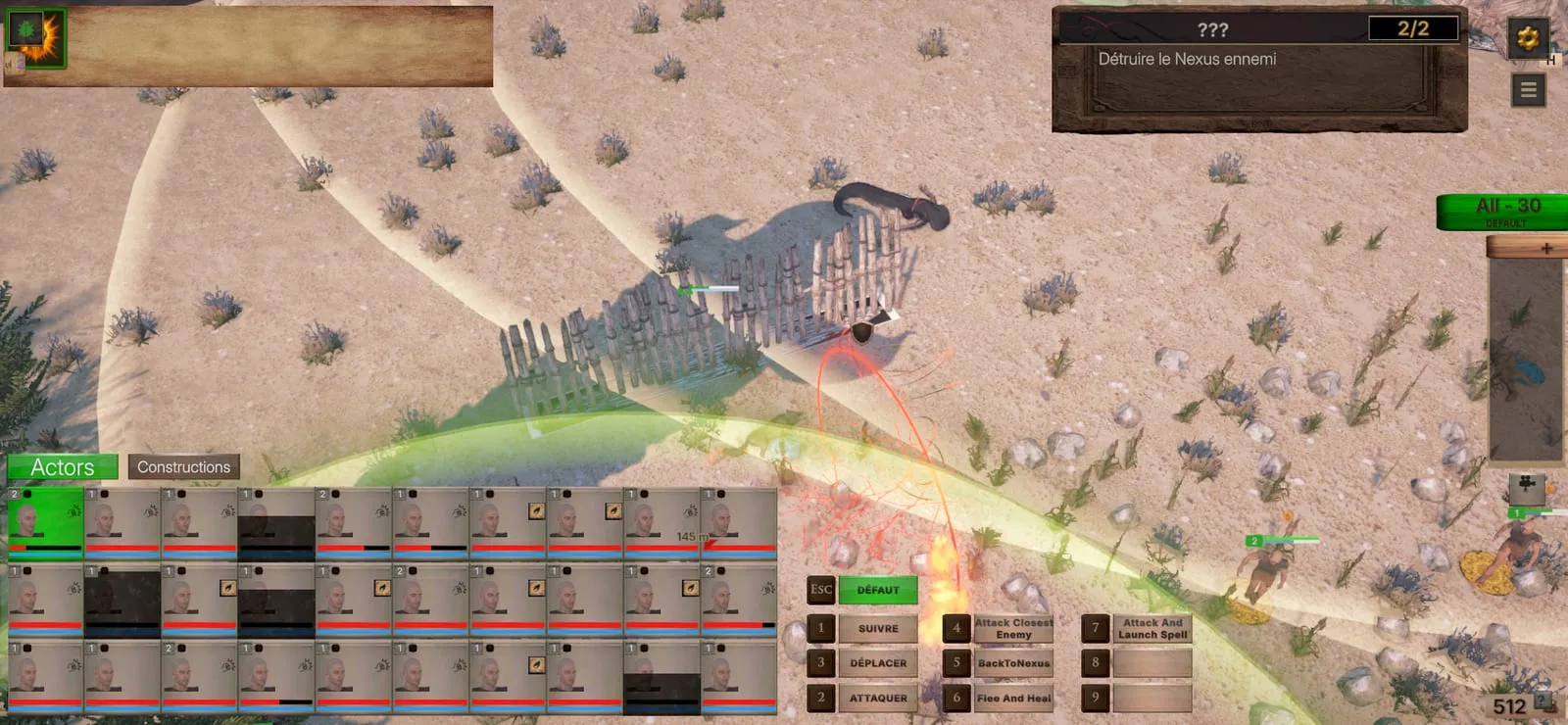
The bug that only existed for the guest
A player reported a PvP session where the cursor died, people died twice and the game kicked them out with nothing in their log. The host saw none of it. Four causes, all client-only, and the one rule that would have prevented all four.
-
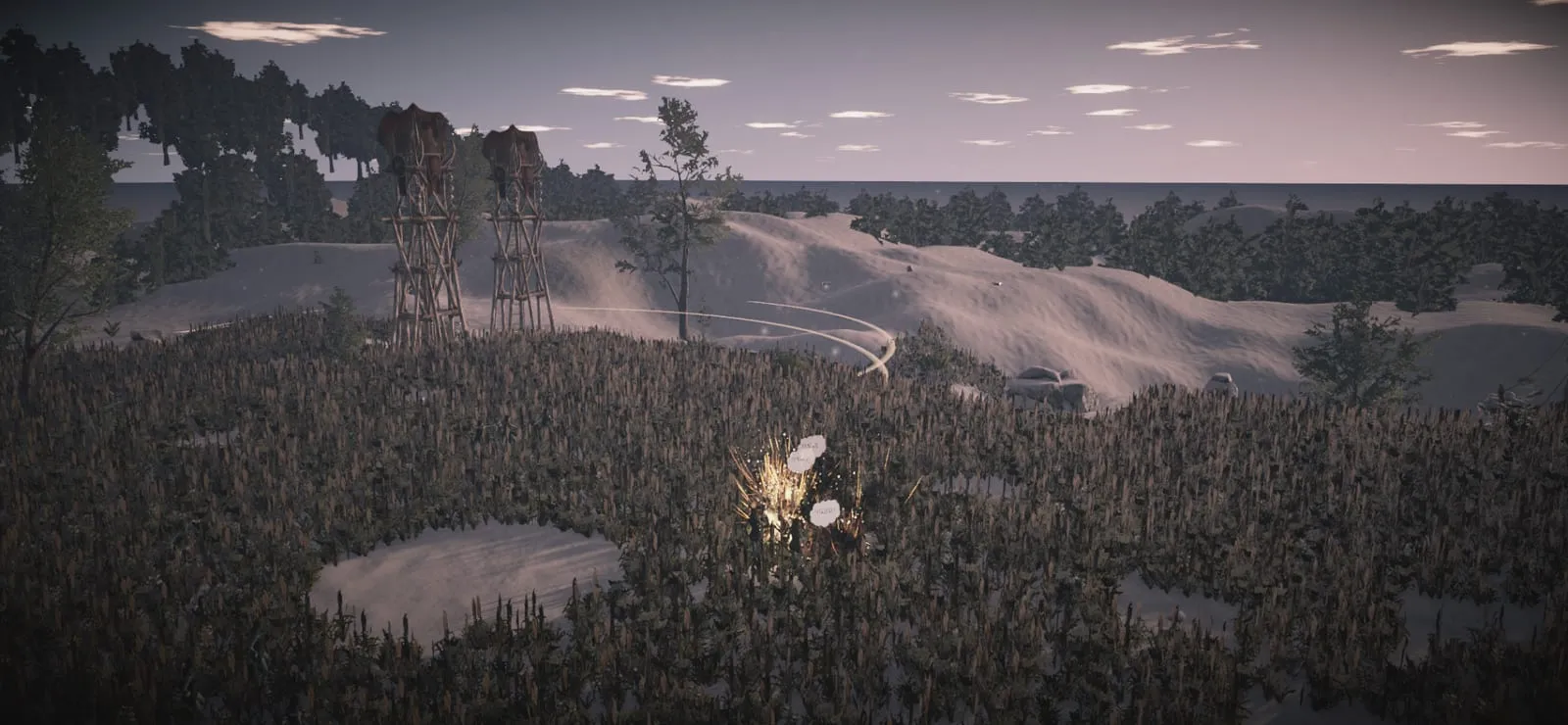
The game films itself
A JSON timeline drives a real match — start a game, frame the camera, run a macro, wait — while the run writes a log of every beat with its timecode. Screenshots, trailers and visual decisions all come out of the same mechanism.
-
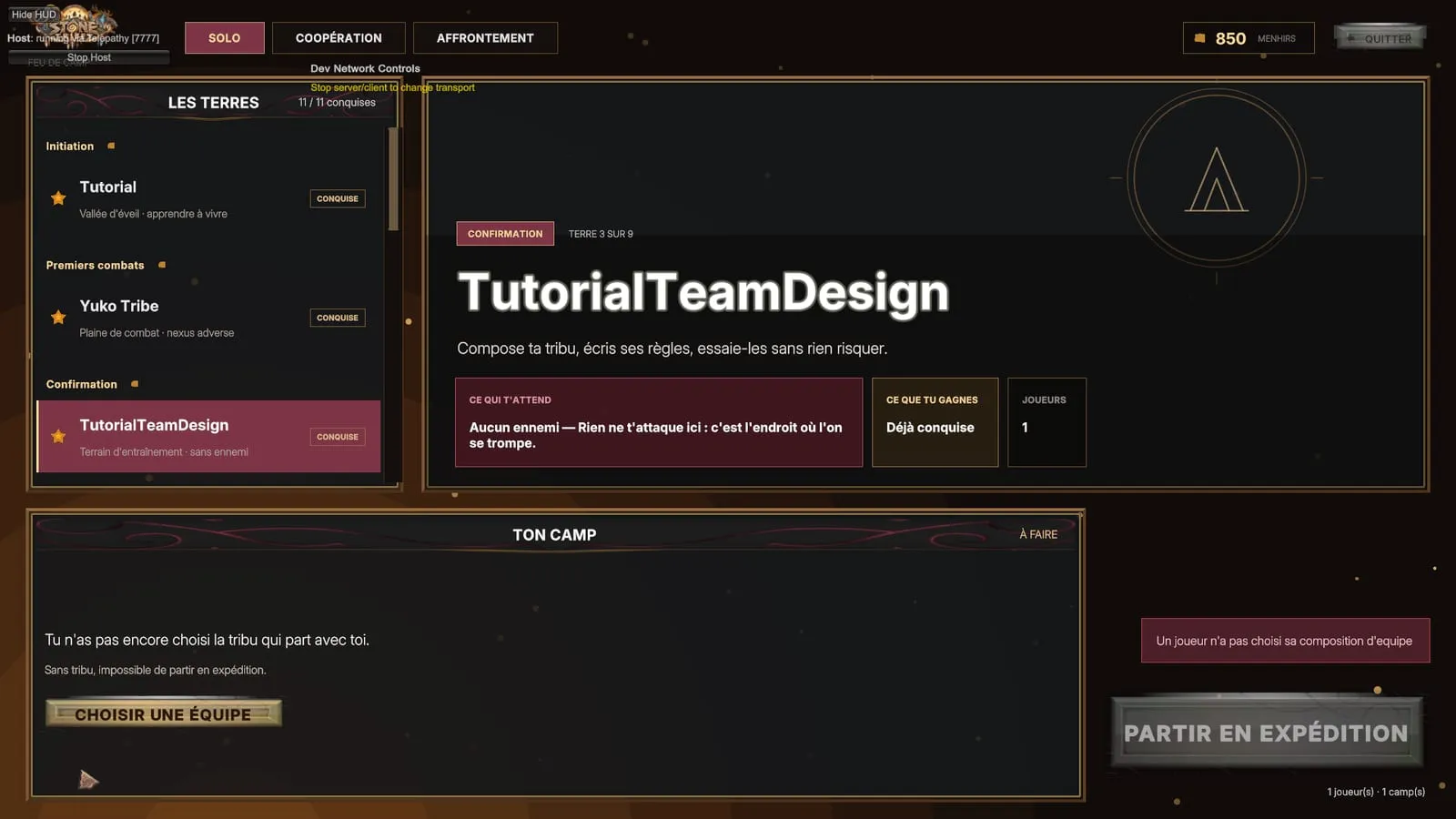
The interface was from another game
Three panels used an opaque black button sprite as both their background and their list background, so an empty inventory read as a large black slab in a game made of wood and painted hide. Replacing that, and the audit tool that found what was actually on screen.