Why you cannot click a unit in Stone Tribes
Stone Tribes is a real-time strategy game with no unit control. You write the conditions your tribe fights under, and then you live with them. Here is what that removes, and what it gives back.
In most real-time strategy games, the fight is in your hands. You box-select, you focus the hurt unit, you pull the wounded one out, you cast at the right second. Skill means doing the right thing fast, and often.
Stone Tribes takes that away. There is no unit you can grab. What you can do is decide, before the fight, what each of your people will do when something happens — and then watch whether you were right.
The three rules everybody writes first
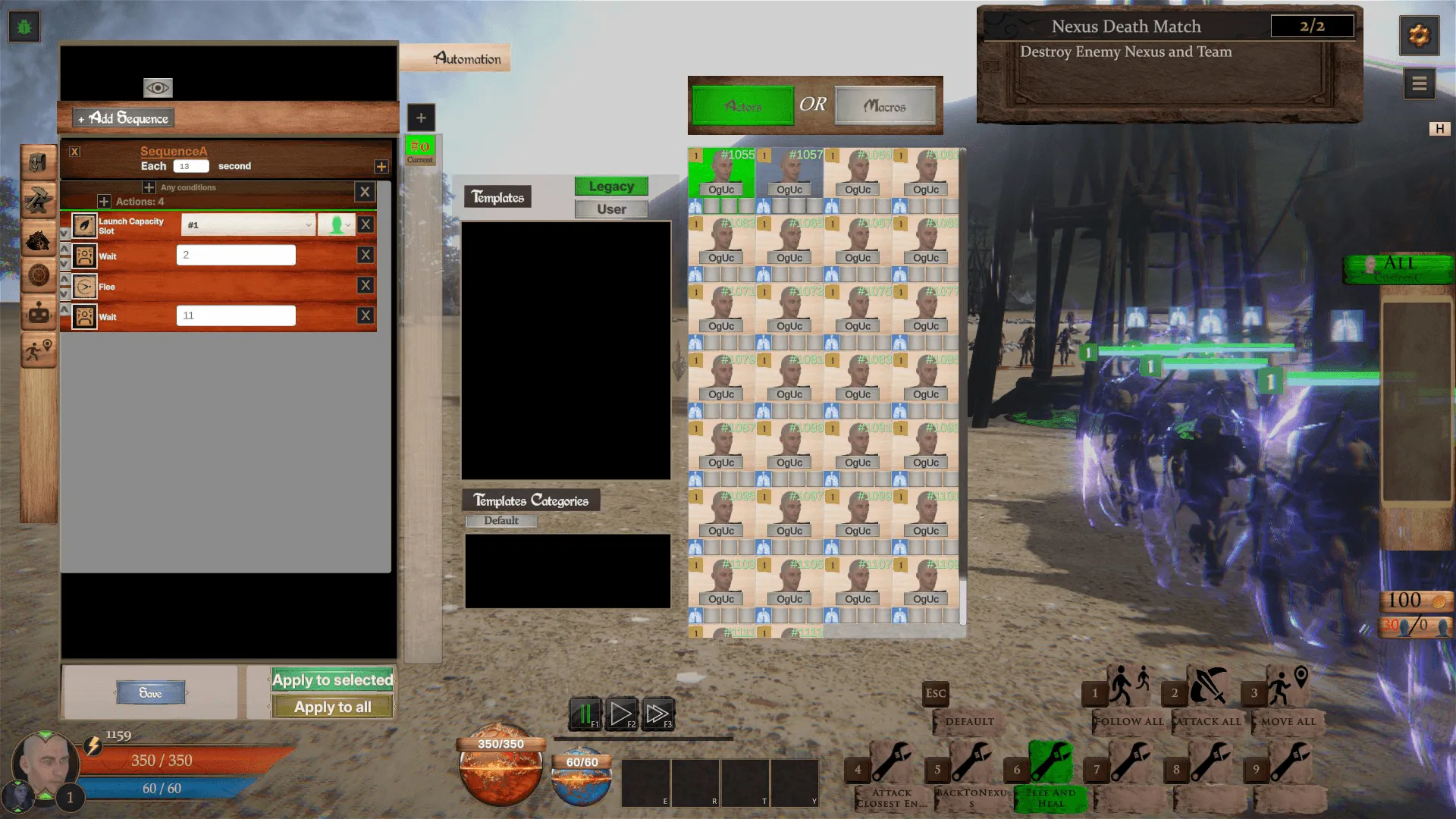
The behaviour panel is a list of rules, each one a set of conditions and the action they trigger. The first three rules most players write look like this:
- Focus the enemy below 30% health. A condition on the closest enemy’s health, an action that attacks it.
- Cast when mana is full. A condition on mana, an action that launches a spell slot at whatever target the game picks for it.
- Fall back when the group drops under half. A condition on health, and the action that flees the closest enemies.
That is already a working tribe. It will win fights that a passive tribe loses, and it will lose to anybody who wrote a fourth rule.
What is left in real time
Taking the clicks away does not leave you watching a screensaver. Two things stay live.
The first is macros: a group can be flipped from one posture to another mid-fight. Bleeding them from range becomes everything in, and the switch costs one key. The second is splitting: the tribe can be cut into groups that carry different rules, so one half holds a totem while the other goes hunting.
So the skill does not disappear — it moves. From your hands to your reading of the fight. You are not asked to be fast; you are asked to have been right.
The part that hurts
This design has a cost I did not expect when I started, and it is the thing I am still working on: a loss has to be readable. When you lose a unit in a normal RTS, you know whose fault it was. Here, your tribe did exactly what you told it, and losing feels like the game decided for you — unless you can see the rule that fired and the number it read. That is the whole reason the F2 overlay exists, and why conditions show their measured value instead of a green or red dot.
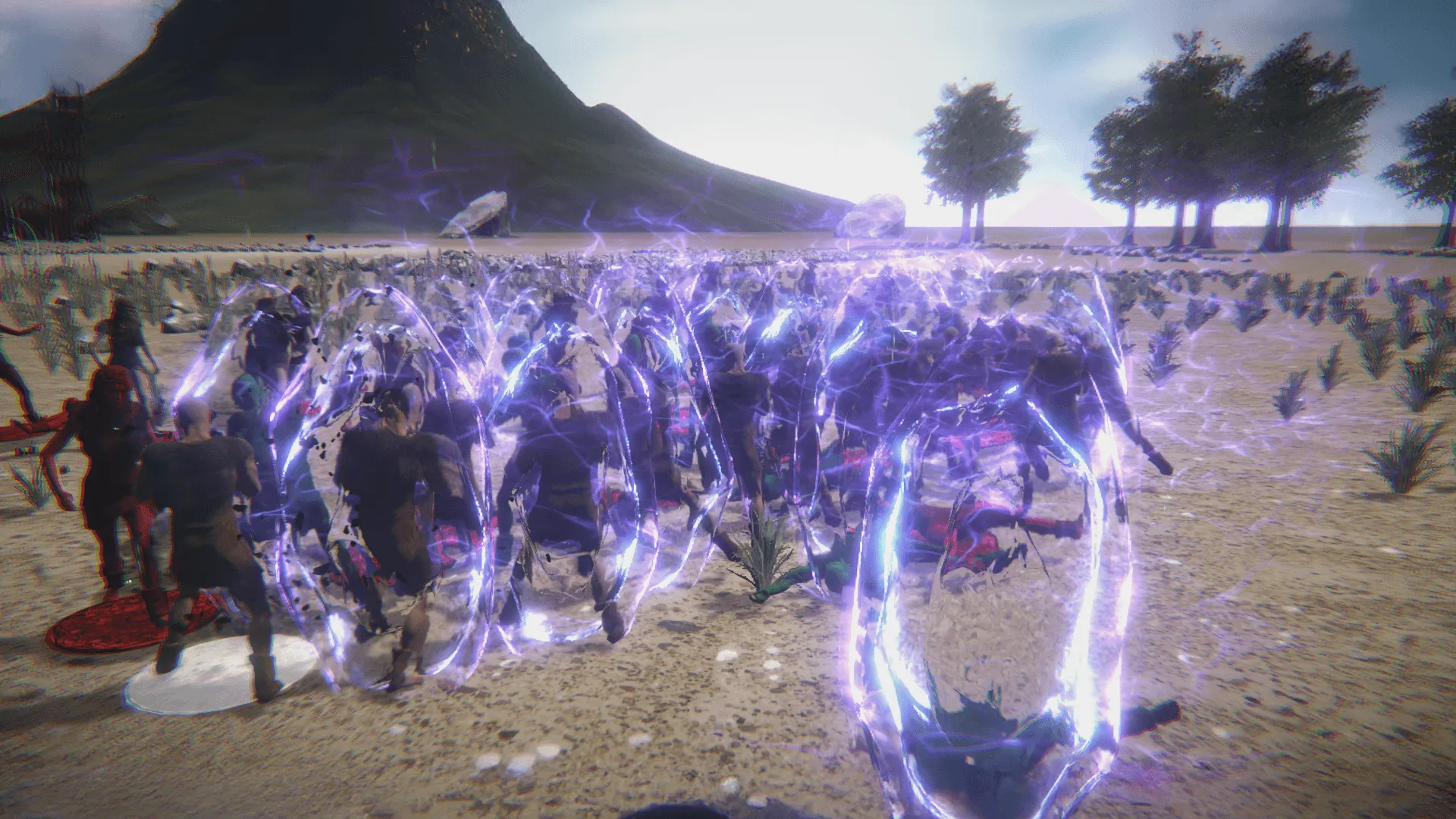
The second cost is the first five minutes. A behaviour editor can read as homework. The tutorial now hands you a tribe that already has three rules, so your first act is to change one, not to write one from nothing.
The honest counter-argument
Plenty of RTS players will tell you that execution is the pleasure, and that automating it is automating the game. They are not wrong about their own taste. What I will say is that it moves the difficulty rather than deleting it: a fight you lost is a rule you got wrong, and that is a thing you can read, fix and test.
If you want to see whether it scratches the itch, the demo is free and a run lasts about twenty minutes.
Keep reading
-
The bug that only existed for the guest
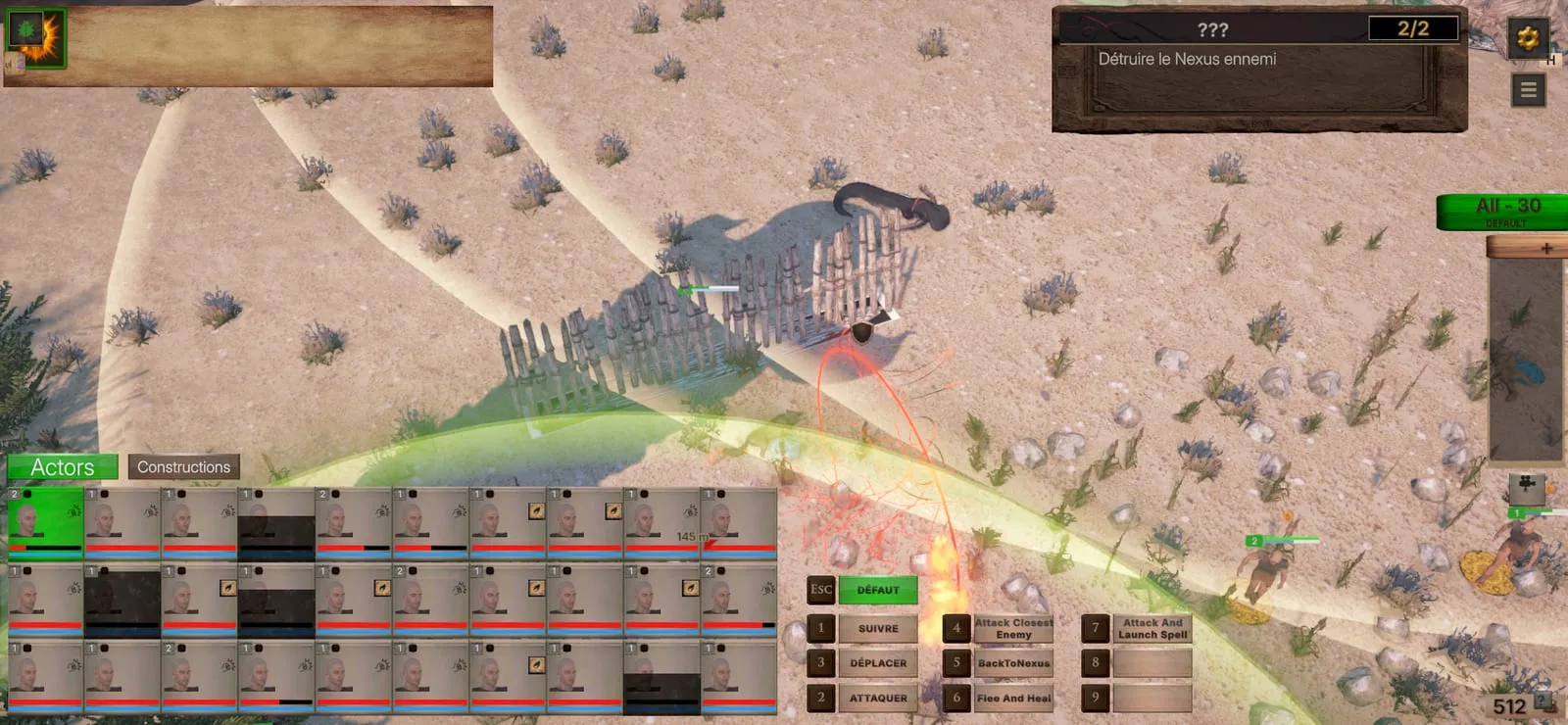
A player reported a PvP session where the cursor died, people died twice and the game kicked them out with nothing in their log. The host saw none of it. Four causes, all client-only, and the one rule that would have prevented all four.
-
The game films itself
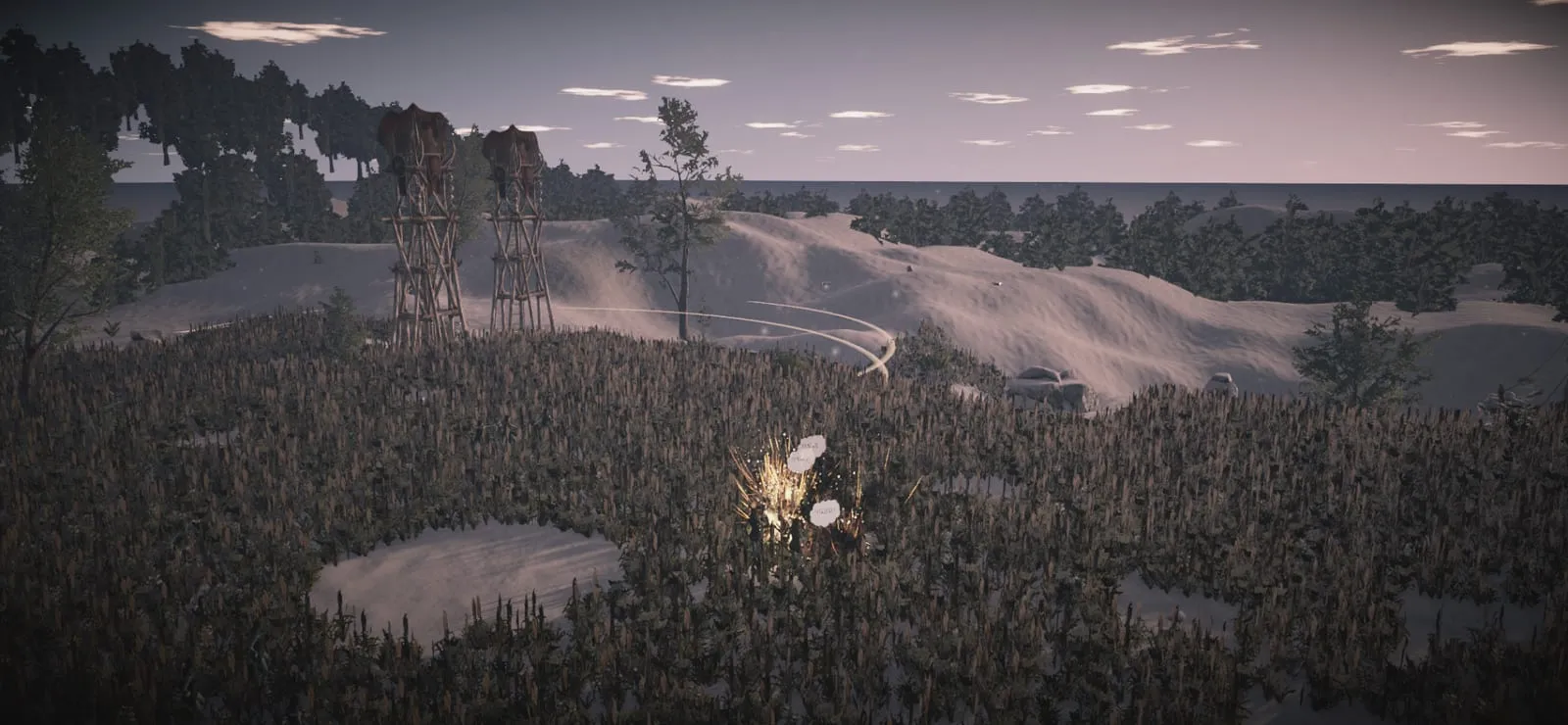
A JSON timeline drives a real match — start a game, frame the camera, run a macro, wait — while the run writes a log of every beat with its timecode. Screenshots, trailers and visual decisions all come out of the same mechanism.
-
The interface was from another game
Three panels used an opaque black button sprite as both their background and their list background, so an empty inventory read as a large black slab in a game made of wood and painted hide. Replacing that, and the audit tool that found what was actually on screen.