The elemental wheel: six elements, two multipliers
Fire melts Ice, Poison chokes Fire. Six elements in one cycle, a resistance that cuts damage by a third and a vulnerability that doubles it — the whole combat rule, and how to use it in a run.
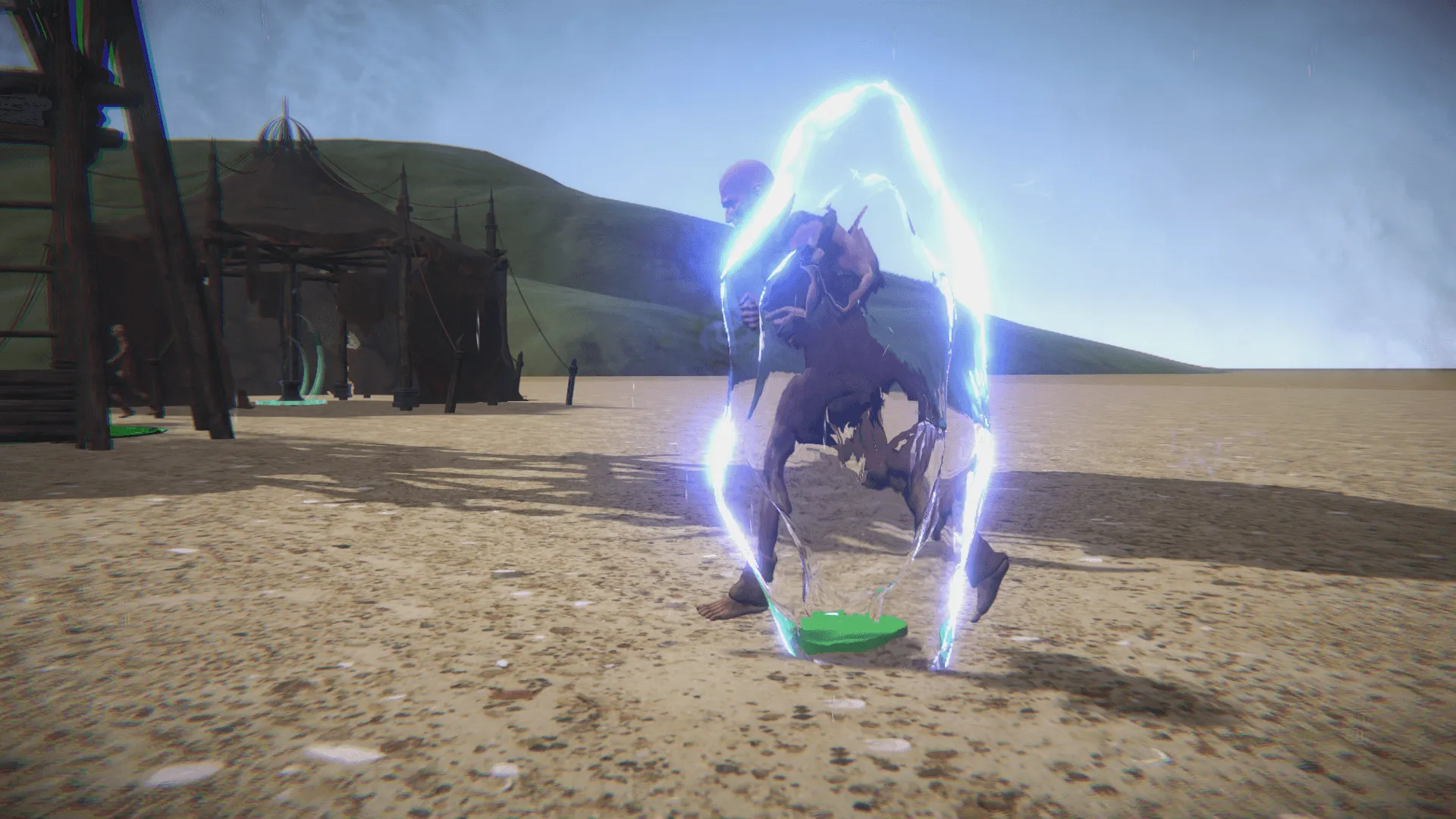
Every point of damage in Stone Tribes carries an element, and every creature holds an opinion about each one. That opinion is a single cycle of six, and once you can recite it you can read a fight before it starts.
The cycle
Each element beats exactly one other, and is beaten by exactly one other:
| Element | Beats | Falls to |
|---|---|---|
| Fire | Ice | Poison |
| Ice | Earth | Fire |
| Earth | Lightning | Ice |
| Lightning | Darkness | Earth |
| Darkness | Poison | Lightning |
| Poison | Fire | Darkness |
Read it as a ring:  Fire melts Ice, Ice cracks Earth, Earth
swallows the bolt, Lightning tears the dark open, Darkness smothers venom, and venom chokes the
flame — back to Fire.
The two multipliers
A creature attuned to an element resists that element and the one it beats, and is vulnerable to the one that beats it. There are only two numbers:
- a resistance cuts the incoming damage by about a third;
- a vulnerability doubles it.
Which means the gap between hitting a Fire creature with Ice and hitting it with
 Poison is not a few percent. It is roughly a factor of three on
that part of the hit.
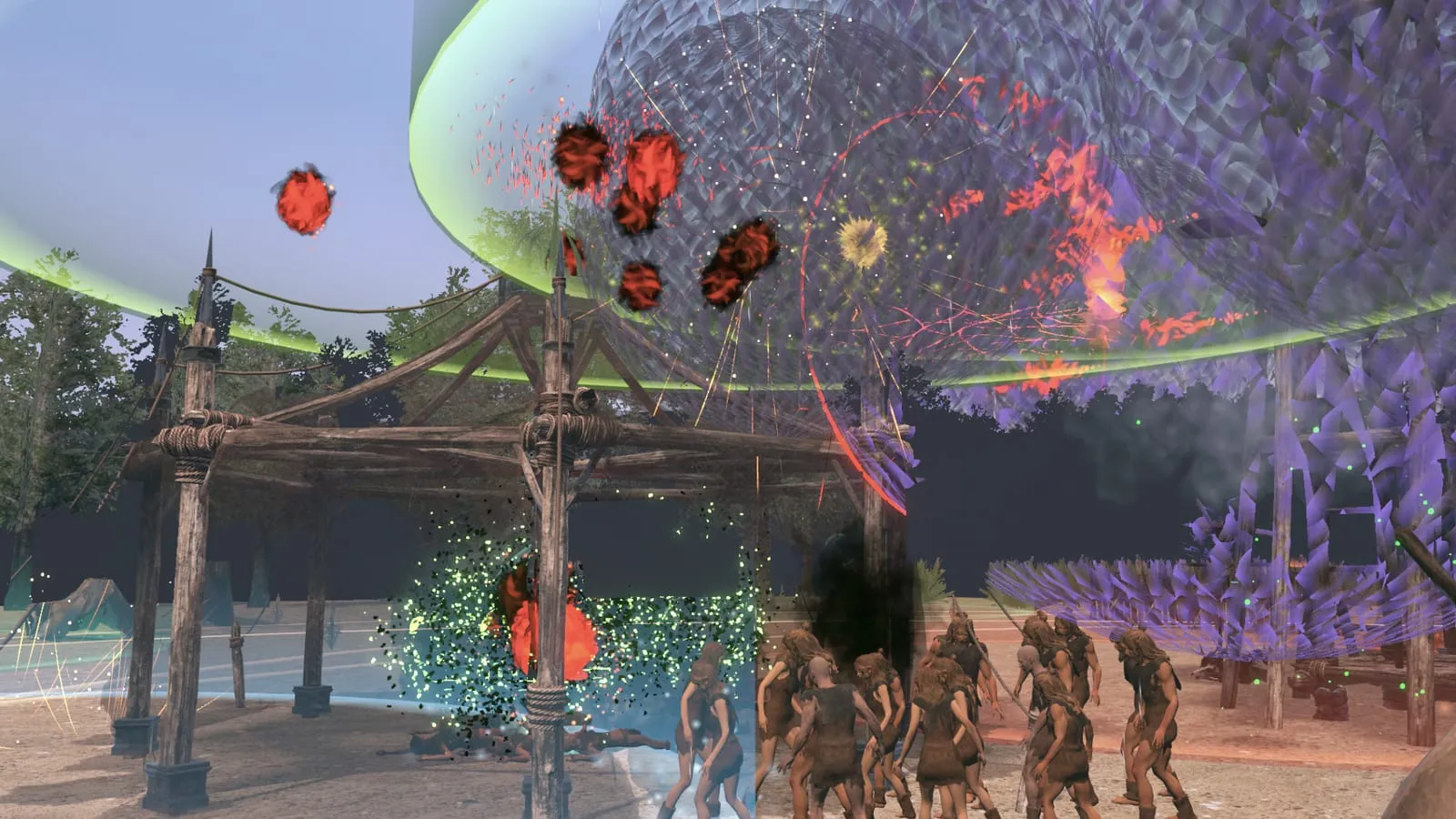
Using it in a run
Scout before you commit. Each creature page in the wiki lists its element, so the composition of a map is knowable. A run where every one of your people carries the element that the enemy resists is a run you have already lost — slowly, and without ever seeing a number.
Do not stack a single element. A tribe that is all Fire reads as a free win to anything Poison. Two elements that do not share a weakness cost you nothing and remove that whole class of defeat.
Plant the resistance. Aura totems placed on the map give everyone standing inside the resistance of an element. On a defence, that turns the enemy’s best element into their worst, and it holds for as long as the totem does.
Then counter the counter. This is the part people enjoy. A melee chain is answered by blinding —
which has a short range and a backlash — and blinding is answered by archers, who are answered by a
blind zone, which is answered by  Cleanse . The wheel
is the first layer of that, not the whole of it.
Where to read the numbers
Every element has a page listing what it beats, what it falls to and which creatures carry it, and every spell page shows the element of its damage and how it scales from level 1 to its maximum. If you only remember one thing from this guide: the enemy’s element tells you which of your spells is worth twice as much.
In the wiki

Keep reading
-
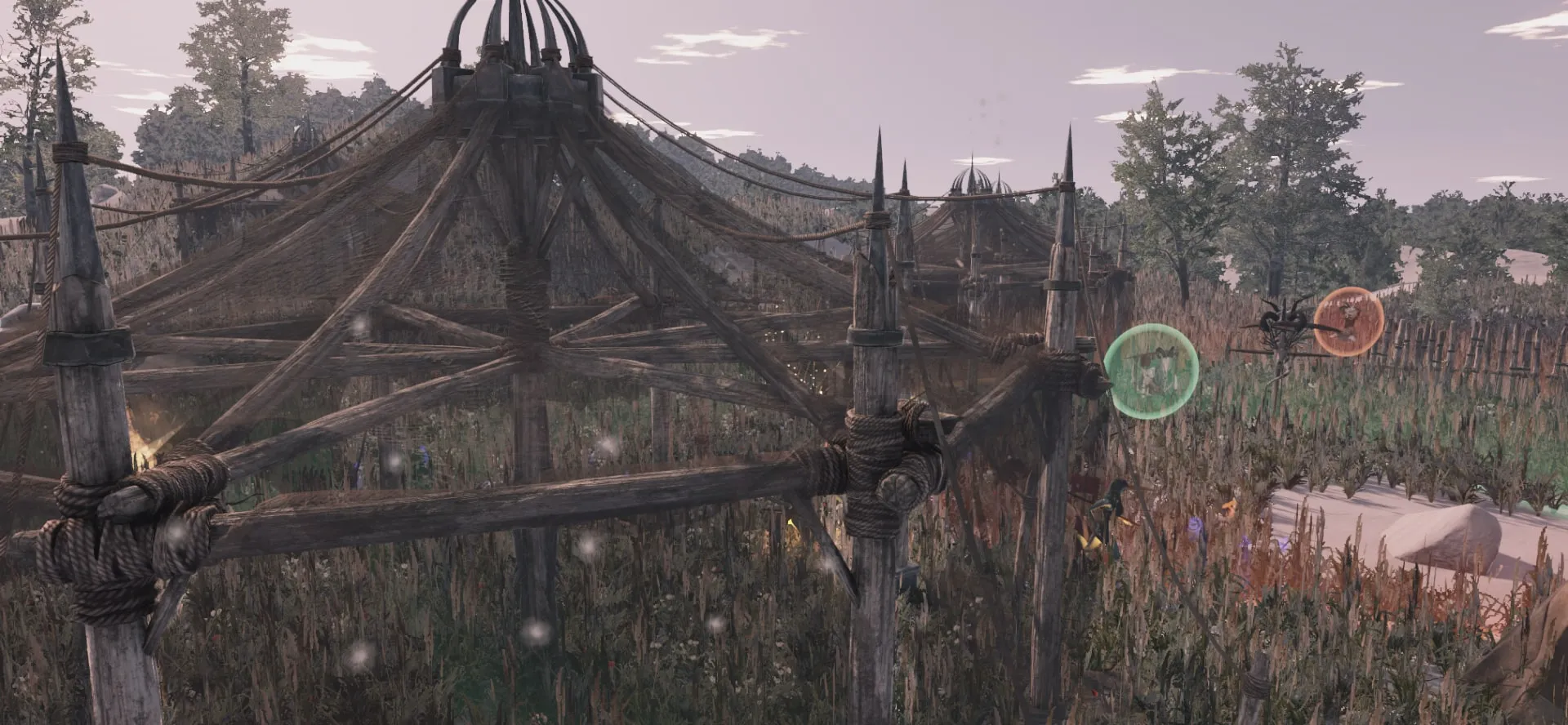
Auras, firing ranges and domes: the three circles on your ground
A circle on the ground can be an aura that buffs whoever stands in it, the reach of something that shoots, or a dome that eats arrows. Three different rules, three different counters — and the one aura whose radius grows stops just short of a bow's range, on purpose.
-
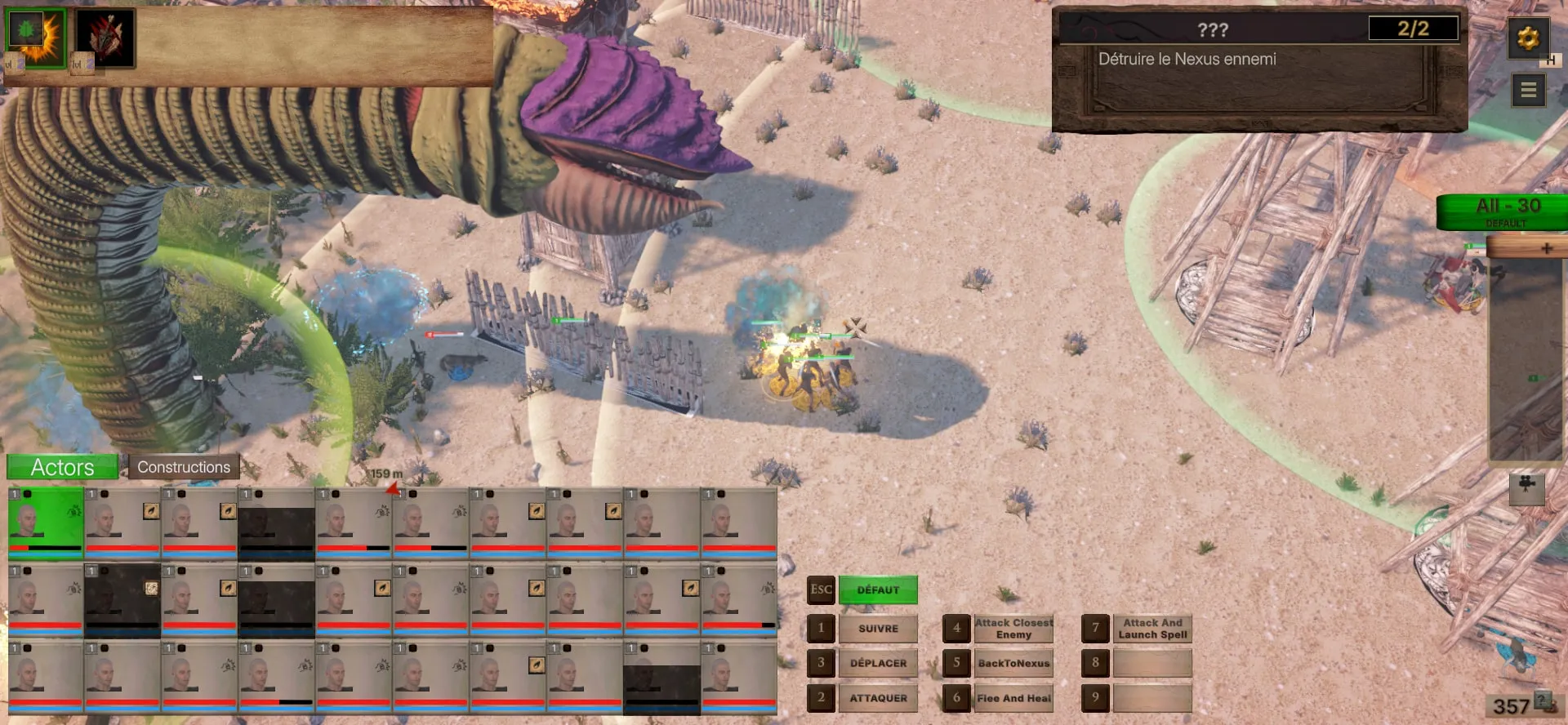
Macros and groups: what is left in your hands
You never click a unit, but two levers stay live during a fight: which behaviour a group is running, and how the tribe is cut into groups. Nine macro keys, six groups, and the three things worth watching instead of clicking.
-
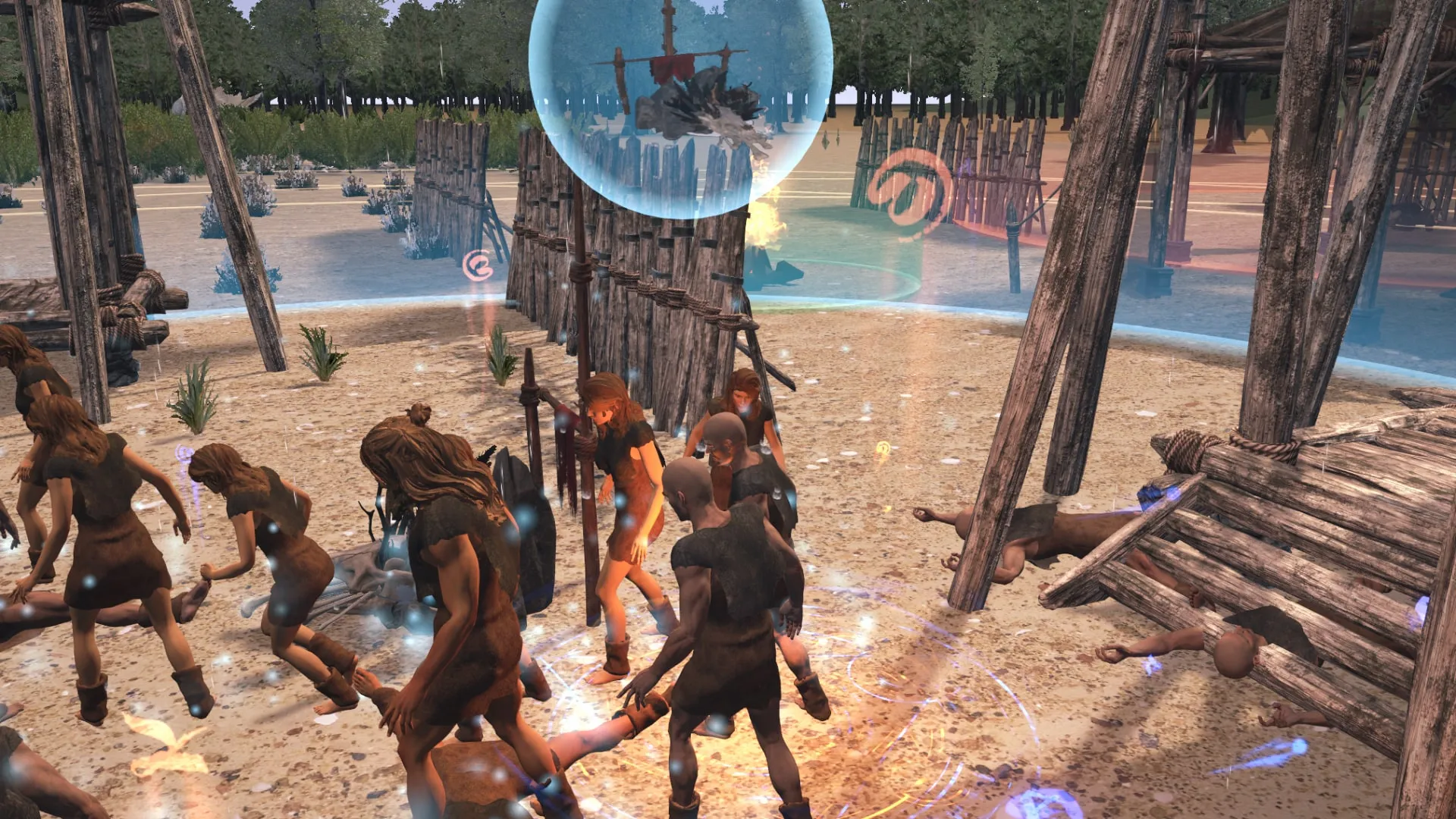
What your bag is actually doing
An item does not have to be equipped to count. The whole bag contributes, at a rate set by the weapon in hand — which makes loading one fighter a real strategy, with a real answer: everything falls on the ground when they die.